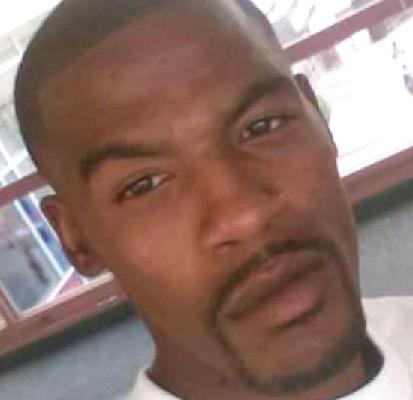
Wendell Alexander, a 26-year-old Black man, was living in Tulsa, Oklahoma when a November 2009 confrontation inside a modest residence turned suddenly and irrevocably violent. What began as a domestic dispute between him and the mother of his child escalated into a physical assault, the argument tightening into a moment where fear, anger, and split-second decisions would decide whether anyone walked away. In the struggle that followed, she grabbed a knife and drove it into his chest, puncturing his heart and delivering a wound from which he would not recover.
The scene that followed was the kind of chaos that neighbors remember long after sirens fade: officers arriving to a home that had already gone quiet, paramedics fighting to stabilize a young man whose life was slipping away, and a woman trying to explain how an argument had ended with a fatal stab wound. By the time the dust settled, the medical outcome was clear—his injuries were not survivable—and official records would place his death in mid-November 2009 in Tulsa, later reflected in databases that list him among those who died by force that year.
In the days that followed, investigators pieced together what they could from statements and physical evidence. The narrative that emerged in public reporting was stark: Alexander had been assaulting the mother of his child when she struck back with the knife, a single defensive blow that pierced his heart. That framing shaped the legal response. Authorities treated the stabbing as self-defense, and the woman who inflicted the fatal wound was not charged in connection with his death.
Because investigators accepted the act as a defensive response to his assault, the case never evolved into a traditional homicide hunt with a fugitive suspect or a string of arrests. No broader conspiracy surfaced, no additional assailants were identified, and no one appears in publicly available records as having been prosecuted for killing him. Instead, his death sits in the gray space where criminal law and human tragedy overlap—a violent encounter contained within the walls of a private home, resolved on paper as self-defense but leaving behind a story of a young father, a partner pushed to a point of fear, and a family that had to bury a son whose name would later appear in cemetery records and crime databases as another life ended by a moment of domestic violence in Tulsa.