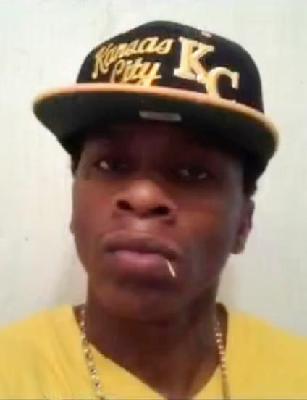
Quinyon Wallace, a 17-year-old African-American male from Oklahoma City, was killed on January 10, 2012, in a shooting that shattered what should have been just another winter afternoon. He was found dead that day in northwest Oklahoma City, the victim of gunfire that turned a car into both his refuge and, ultimately, the site of his final moments.
Investigators later described the case as stemming from a confrontation that escalated into violence, leaving Wallace fatally injured and his name added to the city’s growing list of 2012 homicide victims.
The shooting unfolded on a residential street at 601 Whispering Oak Road, where a car carrying Wallace and 19-year-old Keenen Banks crashed into a home. Shortly after 3 p.m., police were called to the scene; when officers arrived, the vehicle was already on fire, and both young men inside had suffered apparent gunshot wounds. One of them died on the day of the crash, the other the following day, their injuries too severe for doctors to undo the damage that had been done in those chaotic minutes. Witnesses reported seeing a third man fleeing from the burning car, and officers began searching for him, working from a description of a Black man wearing an orange shirt and camouflage shorts. That image of a figure running from the flames became one of the lingering details of the case, a fragment of a story that investigators have never been able to fully complete.
As detectives began piecing together what had happened before the crash, they concluded that Wallace had been involved in a confrontation that led directly to the shooting, though the exact nature of that dispute has never been fully explained in public records. The case was one of several violent deaths in Oklahoma City that year, and it became part of a broader pattern of unsolved or only partially resolved homicides that troubled both law enforcement and the community. Reports on the case describe it as a death by force, a stark phrase that captures the brutality of what occurred but offers little comfort to those left behind.
In the years since, investigators have continued to revisit the file, looking at Wallace’s killing alongside other unsolved 2012 homicides in the city. Police have issued arrest warrants in some related homicide cases from that year, hoping that pursuing those suspects might shed light on overlapping networks of violence, but there has been no public indication that anyone has been identified or charged specifically in connection with Wallace’s death. Case summaries still describe his killing as an unsolved homicide, and appeals for information remain part of the official narrative surrounding both him and Banks, whose murder is likewise listed as unsolved.
Today, more than a decade later, the story of what happened to Quinyon Wallace is told mostly in brief case descriptions and archived news excerpts: a young man in a car, a confrontation that spiraled into gunfire, a crash into a quiet home, a vehicle engulfed in flames, and a third figure disappearing down the street. Behind those few hard facts lies an enduring absence—no named suspect, no trial, no resolution that would allow his family and community to close this chapter. His case remains open, suspended between the moment of the crash and the hope that someone, someday, will step forward with the piece of information that finally explains why he never made it home.