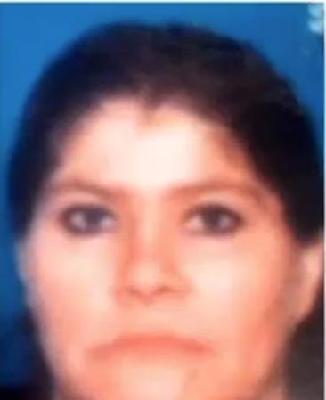
Was Eniya killed in a murder suicide? At 27 years old, Eniya R.H.A. Aeon, an African-American woman from Oklahoma City, stepped into a room at the Days Inn along the Interstate 35 service road on the southeast side of the city, unaware that the evening of April 3, 2013, would be the last night of her life. Police were called just before 6 p.m. after guests and staff reported the sharp, unmistakable sound of gunshots and a disturbance inside one of the rooms.
When officers forced their way in, they found two bodies on the other side of the door: Eniya and a man identified as 40-year-old Rasheen Sanders, both lying dead from gunshot wounds in what investigators immediately feared was a deadly domestic dispute that had spiraled beyond anyone’s control.
In the hours that followed, detectives pieced together a grim sequence of events. Witness statements and early investigative work indicated that the confrontation inside the motel room had been fueled by an argument, and that during this altercation Sanders produced a firearm. According to investigators, he shot Eniya and then turned the gun on himself, leaving no one in the room alive to tell the full story of what was said in those final moments. Police had been dispatched on reports of both gunfire and a domestic dispute, and by the time they arrived, all they could do was secure the scene, collect evidence, and document yet another tragedy in a city already counting its homicides for the year. In official tallies, Eniya’s killing was recorded as Oklahoma City’s fifteenth homicide of 2013, but within the cramped motel room, it was not a statistic so much as a silent tableau of intimate violence and sudden finality.
Beyond the yellow tape and the flashing lights, the news hit hardest in the places where people knew her not as a name in a headline but as a neighbor, a student, and a mother. In a southeast Oklahoma City apartment complex, one neighbor remembered how she would watch over Eniya’s young sons when they played outside, describing the bond between them as being “like family.” Another recalled the shock at learning what had happened, saying that it was impossible to imagine how she had ended up in that motel room at the center of such violence. Those who knew her described a young mother who was trying to move forward, “working to get her life on track,” balancing school, work, and parenting while navigating the everyday difficulties that rarely make the news until something catastrophic happens.
Her obituary fills in the contours of a life that stretched far beyond the scene of the crime. Born in Oklahoma City on June 27, 1985, to MaQiba Aeon and Michael Onyeje, Eniya grew up rooted in the same community where she would later die. She was the sister of Ebony D. Cooks and Essence G. Aeon and the mother of two boys, Kazin J. Aeon and Delanee D. Galberth, a small family constellation that friends and relatives gathered around in grief after her death. She had pursued college studies, with records noting her education at Rose State College and neighbors telling reporters she was attending Oklahoma City Community College, a sign that she was trying to build a more secure future. Her listed occupation in retail and sales suggests days spent working the kind of jobs that keep families afloat but rarely bring stability quickly, the kind of work that often leaves people juggling bills, children, and long shifts.
In the aftermath of the shooting, attention turned to Sanders, the only person investigators believed could be responsible. Police concluded that he had shot Eniya and then taken his own life, and both local reporting and later case summaries identified him as the primary suspect. With the suspected gunman dead at the scene, there was no one left to arrest, and the case was classified as a murder-suicide rather than an open hunt for an unknown killer. Case records describe the file as “solved” with the primary suspect deceased, signaling that, from a law-enforcement perspective, the trail ended in that motel room. Yet for her family, friends, and two young sons left behind, the resolution on paper did little to quiet the questions about what led to that violent confrontation, what might have changed its course, and how a life full of unfinished plans could be reduced so abruptly to a date, a cause of death, and a line in the homicide statistics for a single year in Oklahoma City.