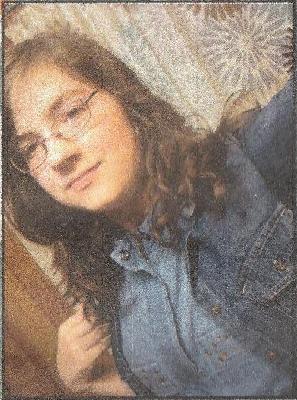
Michelle Stephens, a 29-year-old white woman, spent the last moments of her life in the dimly lit parking lot of the Magnuson Motel along the south Interstate 35 service road in Oklahoma City, where the quiet of a December night was broken by gunfire. In the early hours of December 11, 2015, police were called to the motel after reports of a shooting; officers arrived to find Michelle lying in the parking lot, gravely wounded from a gunshot.
She was rushed to a nearby hospital, but despite efforts to save her, she died a short time later, becoming one of Oklahoma City’s final homicide victims of 2015.
Investigators quickly pieced together that Michelle had arrived at the motel in a vehicle driven by a man later identified as 43-year-old Michael Wayne McKinzie. Surveillance footage described in court records showed McKinzie pulling into the parking lot with Michelle in the passenger seat. After parking, he stepped out of his own vehicle and climbed into the passenger side of a nearby pickup truck driven by another, unidentified person, leaving Michelle alone in his car. Moments later, a Chevy Blazer entered the lot and two people climbed out and walked toward Michelle. What followed, according to the arrest warrant, looked like an attempted robbery that spiraled out of control: a confrontation, a struggle beside the vehicle, and then a shot that left Michelle collapsing outside the car. Through it all, McKinzie remained in the pickup, never returning to aid her, and when the assailants fled in the Blazer, the truck he was in pulled out and followed them away from the scene.
As detectives dug deeper, the investigation pushed them into the shadowed world of street-level drug trade. The arrest warrant later obtained by police alleged that McKinzie had come to the Magnuson Motel that night for a methamphetamine transaction, and that Michelle, caught up in circumstances not fully explained in public records, was not the intended target of the robbery. Investigators believed the real focus of the would-be robbers was McKinzie’s drug supplier, suggesting that Michelle was an unintended victim of a planned rip-off in a parking lot where deals and double-crosses could unfold in minutes. This theory helped explain the chilling detail that McKinzie, instead of trying to help Michelle after she was shot, allegedly left with the very vehicle believed to be pursuing the robbers, further deepening suspicion about his role in the chain of events that led to her death.
For more than a year, the case remained without an identified suspect in the media, even as homicide detectives worked behind the scenes to untangle the relationships between everyone present that night. Then, in March 2017, Oklahoma City authorities took a major step: an arrest warrant was filed for Michael Wayne McKinzie, charging him with first-degree murder and possession of a controlled dangerous substance with intent to distribute in connection with the fatal shooting of Michelle Stephens. The warrant not only named him but laid out the surveillance narrative, portraying him as a key figure whose alleged drug activity brought Michelle into harm’s way and whose actions immediately after the shooting cast doubt on any claim of innocence.
Even with that development, the path to full accountability was not straightforward, and the case continued to evolve. Public case summaries compiled from multiple news outlets indicate that it was not until February 2019 that another man, identified as Justin Marcoux, was formally charged with first-degree murder in Michelle’s death, a charging decision that came more than three years after the shots were fired in the motel parking lot. According to those summaries, the delay stemmed from the time needed to assemble a strong case, including reviewing surveillance, interviewing witnesses connected to the drug activity, and sorting out the roles of everyone present during the botched robbery. With Marcoux’s arrest and charge, and earlier action taken against McKinzie, the case is now classified in public homicide databases as solved, reflecting authorities’ conclusion that they had finally identified and brought charges against those believed responsible for the events that ended Michelle Stephens’ life in that cold Oklahoma City parking lot.