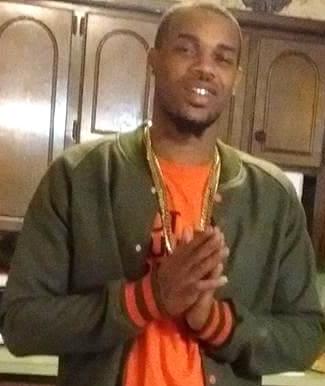
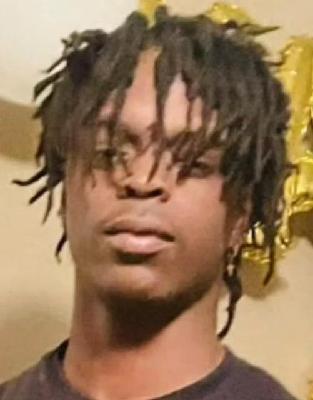
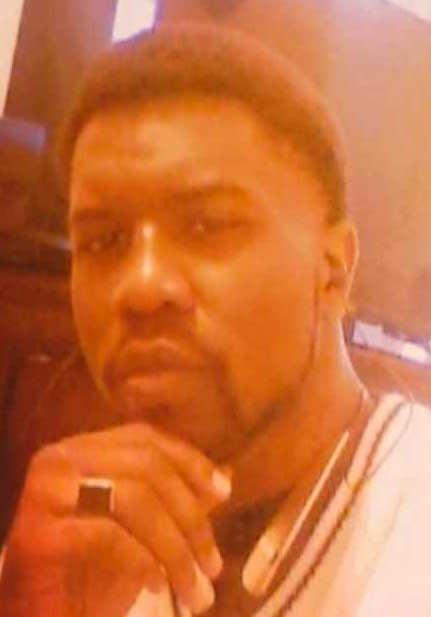
Gerald Wayne Frederick, a 38-year-old Black man, spent nearly his entire life in Oklahoma City, where he was born in November 1977 at University Hospital to Donald Wayne Frederick and Audrey McCoy. He grew up in the city's north-side schools, attending John Marshall High before enrolling in Job Corps, where he earned his GED and a certificate in welding, training for steady, hands-on work that could support a family and a future.
Friends and relatives later remembered him as rooted in his hometown, a man whose adult life never drifted far from the streets and neighborhoods where he had first learned to ride a bike, catch the bus to school, and dream about what might come next.
On the night of Friday, March 25, 2016, those familiar streets turned dangerous. Late in the evening, just after 10:30 p.m., a fight broke out at the Dunjee Apartments, also known as the Fred Factory Garden Apartments, a public housing complex along the 3800 block of Dunjee Boulevard in Spencer, just northeast of Oklahoma City. Witnesses later told police that it was not a brief argument but a “group fight,” a chaotic confrontation in the courtyard of the complex. In the middle of that turmoil, amid shouting and movement in the dark spaces between the townhouses, Frederick was stabbed.
Wounded and trying to get away from the violence, he did not wait for an ambulance at the scene. Instead, he was loaded into a private vehicle and driven away from the apartment complex to a second location: the 1000 block of Spencer Road in nearby Midwest City, where he and those with him hoped they would be safer and could call for help. From there, emergency crews rushed him toward an area hospital, but his injuries were too severe. He was pronounced dead in the ambulance, his life ending in transit between the place where he had been attacked and the care that could not quite reach him in time. Local authorities would later mark his killing as Oklahoma City's 18th homicide of 2016.
In the days that followed, the violence at the apartment complex was reduced to a few stark lines in local news reports and police statements. Investigators identified Frederick as the victim and established the sequence of events: the group fight at the Dunjee Apartments, the stabbing, the frantic drive to Spencer Road, and his death en route to the hospital. Officers emphasized that they were searching for the person responsible; one report noted plainly that no suspects had been arrested, and another urged anyone who knew anything about “the person or people involved in the fight” to call the Oklahoma City Police Department's homicide tip line. Publicly available records and news coverage do not reflect any later announcement of an arrest or named suspect in the case, leaving the official story frozen at that early stage of the investigation.
While detectives worked their leads, Frederick's family and community moved quickly to honor him. An online memorial recorded the basic facts of his life—his birth in 1977, his death on March 25, 2016, and his burial at Riverside Gardens Cemetery in Oklahoma City—sketching the arc from his first days in the city to his final resting place there. The words written for him speak more about who he was than about the night he died: a local son who finished school through hard work, trained for a trade, and was laid to rest not far from where he had been born. Against that intimate portrait, the unresolved questions about the fight at the Dunjee Apartments and the still-unknown hand that wielded the knife remain a stark contrast, a gap in the story that official reports have yet to fill.