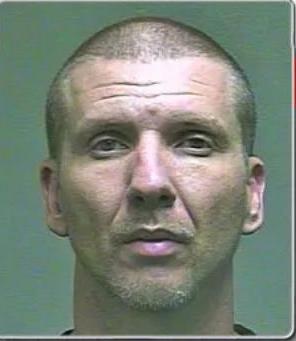
Erlin Pereira Flores, a 35-year-old Hispanic male, spent his final night in northwest Oklahoma City, where the long rows of apartments along Athens Avenue were settling into the quiet of late summer when violence found him. Late in the evening of August 30, 2016, police were called to check on a man lying outside the Meridian Apartments in the 4200 block of Athens Avenue, near Northwest 10th Street and Tulsa Avenue.
Officers arrived to find Pereira Flores gravely injured with wounds that investigators immediately recognized as the result of a homicide. He was rushed from the scene to OU Medical Center, but the damage was too severe; not long after being transported from the pavement outside the apartment buildings, he was pronounced dead, his killing marked by authorities as Oklahoma City’s 54th homicide of the year.
In the hours after the shooting, the crime scene lights washed over the otherwise ordinary apartment complex, illuminating markers on the ground and the path investigators believed Pereira Flores had taken before he collapsed. Detectives canvassed the area, looking for security cameras, witnesses, anyone who had seen or heard something in the minutes before the welfare call. The location — a residential complex in a working-class stretch of northwest Oklahoma City — suggested that the attack had not happened in some isolated corner of the city, but in a place where people were coming and going, returning home from work, stepping outside for the night. Even before a clear picture of the suspect or suspects emerged, police treated the killing as a deliberate attack and appealed to the community for help, urging anyone with information to come forward as they pieced together how Pereira Flores ended up mortally wounded outside the apartments.
Within days, the investigation began to coalesce around a pair of teenagers who, according to police, had been in the area that night. First, a 17-year-old boy was arrested on a complaint of first-degree murder in connection with the shooting, taken into custody as detectives followed up on leads from the neighborhood and from their wider inquiries. Not long afterward, a second teenager, just 15 years old, was arrested on a complaint of second-degree murder and robbery with a dangerous weapon. Police publicly identified the two as Christopher Cottonham, age 17, and Keland Helms, age 15, describing both as juveniles but emphasizing that the allegations against them were extremely serious. Their arrests came only a week after the killing, signaling that investigators believed they had quickly identified the main players responsible for the violence that ended Pereira Flores’s life.
As more details filtered out through subsequent reporting, a motive emerged that made the shooting feel even more senseless. In material drawn from investigative accounts, one of the teenagers was said to have admitted involvement and to have told authorities that he set out that night intending to rob someone he perceived as belonging to a particular ethnic background, turning prejudice and opportunism into a lethal plan. Pereira Flores, who was simply present in the wrong place at the wrong time from the offenders’ perspective, became the target of that plan. Memorial and case-summary sites later described the crime as a targeted act of gun violence driven by that attitude, rather than a random confrontation, underlining how deliberate the decision to attack him appears to have been.
Publicly available records and case summaries indicate that, after the arrests of Cottonham and Helms, authorities treated the homicide as cleared, and later compilations of solved cases list Pereira Flores’s killing among those in which suspects were identified and taken into custody. While the full court dispositions and any eventual sentences for the two teens are not extensively documented in easily accessible news coverage, the trajectory of the case — a late-summer shooting outside an Oklahoma City apartment complex, a rapid investigation, and the arrest of two juveniles on murder and robbery complaints — has since been preserved in memorial pages and homicide databases. Together, they portray a brief, violent encounter that ended one man’s life and set two very young suspects on a path through the criminal justice system, all stemming from a decision that appears to have combined a desire for robbery with a chilling disregard for the humanity of the person they chose to confront.