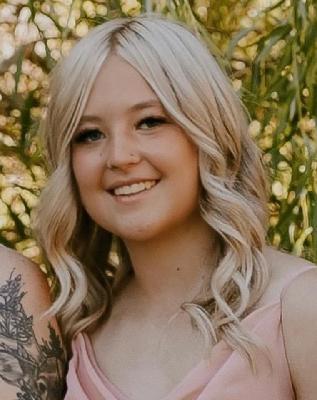
In the months before she vanished, Cammi Denee Miller was living a life unmoored. The 33-year-old mother of two daughters was homeless in Cedar City, Utah, without a car, a job, or even a cell phone to connect her to the world. Her movements were often unpredictable, a fact that would later create immense challenges for investigators trying to piece together her final days. Court records show a period of stability in her young adulthood gave way to increasingly erratic behavior and several arrests in the two years leading up to her death. Despite these struggles, she was a daughter and a mother, and her family deserved answers that have yet to come.
The last confirmed sighting of Cammi was in the Cedar City area on March 18, 2014. A month-long gap in her timeline followed, a void of information that has troubled detectives. Her mother reported to a mental health professional on March 25 that she hadn't been seen in two weeks.
Cammi's official disappearance was noted on April 22, when she failed to appear for a court hearing. The silence ended tragically on May 9, 2014, a warm spring day. A retired Los Angeles police officer was target shooting in a remote area near Shurtz Canyon, about two miles south of the city limits off Tipple Road, when he spotted what he first thought was a mannequin's leg under a pile of debris. A closer look revealed the decomposing body of a young woman.
The Iron County Sheriff's Office was called to the scene. They initially labeled the death as suspicious, but by May 15, their investigation led them to rule it a homicide. An autopsy confirmed Cammi Miller had been killed, though investigators have deliberately withheld the specific cause of death and the results of a toxicology report. They believe these details are known only to the person responsible and serve as a "smoking gun" to protect the integrity of the case. Detectives were able to determine that she had not been sexually assaulted and that she had not died by suicide. The condition of her body suggested she had been deceased for at least a few weeks, exposed to the elements.
The investigation, led by detectives including Iron County Sheriff’s Sgt. David Mitchell and Lt. Del Schlosser, faced significant hurdles from the start. The location where Cammi was found was not the place she was killed; it was a dump site, yielding little forensic evidence. Her transient lifestyle made tracking her final days exceedingly difficult. Unlike most people with consistent daily routines, Cammi moved between different social circles. "She was friends with so many people," Schlosser explained. "It made it hard in the investigation to figure things out as she would go from this group to that group, from this location to that location." Without phone records or surveillance footage, investigators had to rely on interviews, but the tips they received failed to lead to a breakthrough.
In the initial weeks, sheriff's office personnel worked around the clock, turning a conference room into a war room as they chased down leads. They were determined to identify a suspect, but the trail was cold. "You keep thinking that in time something will happen – that somebody will feel guilty and want to come clean," Sgt. Mitchell said years later. The Utah Division of Child and Family Services had custody of at least one of her children at the time of her disappearance, and court records noted that Cammi would check in with them "once in a while."
As of April 2017, the murder of Cammi Denee Miller remained one of Iron County's few unsolved cold cases. Investigators were still actively seeking the one key piece of information that could bring justice for Cammi and her family. A $5,000 reward has been offered for information leading to the resolution of her case. The Iron County Sheriff's Office continues to ask for the public's help and urges anyone with any information, no matter how insignificant it may seem, to come forward.