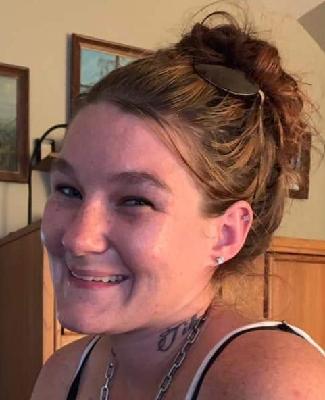
Sonia Exelby, a 32-year-old British woman from Portsmouth, England, became the victim of a disturbing kidnapping and murder in Marion County, Florida, in October 2025. Her body was discovered on October 17, 2025, buried in a shallow grave in a wooded area of Marion Oaks, southwest of Ocala. What initially began as an international missing-person investigation developed into a homicide case involving an online relationship, allegations of psychological manipulation, and evidence that Exelby had become frightened and regretted the circumstances that brought her to Florida. The investigation ultimately led to the arrest, prosecution, and conviction of Dwain Chadwick Hall, a local man who had communicated with Exelby for approximately two years before her death.
Exelby had been living in Portsmouth and reportedly struggled with significant mental health challenges, including suicidal thoughts.
Investigators later learned that she had developed an online relationship with Hall through a website associated with violent sexual fantasies. According to investigative records, their conversations included discussions of bondage, torture, suicide, and the possibility of Hall ending her life. Hall later claimed that Exelby had voluntarily arranged to travel to Florida to be killed and had agreed to pay him approximately $4,000. However, investigators and prosecutors emphasized that the communications and other evidence revealed a far more complicated situation involving fear, vulnerability, and coercion. Prosecutors argued that Hall had spent years cultivating a relationship with Exelby and exploiting her psychological struggles.
On October 10, 2025, Exelby arrived at Gainesville Regional Airport after traveling from England. Hall met her at the airport and transported her to an Airbnb rental property in Reddick, a rural community north of Ocala. Investigators subsequently discovered that Hall had purchased several items before her arrival, including rope and a shovel. These purchases became important evidence because prosecutors argued that they demonstrated preparation for the crimes. Exelby had booked a return flight to England for October 13, but she never boarded the aircraft. Her disappearance raised immediate concerns among relatives, who were unaware of the full circumstances surrounding her trip.
During the days following her arrival, Exelby reportedly communicated with a friend through Discord, expressing emotional distress and indicating that she regretted the arrangement. Investigators interpreted those messages as evidence that she was frightened and wanted to escape the situation. Prosecutors later presented evidence that Hall had physically assaulted her while they were at the rental property. A recording made by Hall showed Exelby with visible bruising while he discussed her death with her. Prosecutors argued that the recording demonstrated his efforts to pressure and manipulate her rather than an arrangement involving meaningful consent. The messages and recording became particularly significant because they challenged Hall's assertion that Exelby had willingly accepted everything that happened to her.
On October 12, surveillance and investigative records placed Hall at a Lowe's store in Ocala, where he purchased a plastic tarp. Investigators subsequently traced his movements to a wooded area in Marion Oaks, where he remained for approximately an hour. Authorities later identified that location as the area where Exelby's remains were buried. Although her exact time of death was not established in the publicly reported findings, investigators determined that she had suffered four sharp-force injuries consistent with being stabbed. Her death was formally classified as a homicide. The discovery of her remains on October 17 marked the end of the search for her whereabouts and the beginning of an intensive effort to establish precisely what had happened during her final days.
The investigation began gaining momentum on October 13, when the Florida Department of Law Enforcement's Gainesville Field Office received a request for assistance through INTERPOL. Hampshire and Isle of Wight police in England had reported Exelby missing and endangered after she failed to return home. British investigators provided information about her travel arrangements, financial transactions, and potential contacts in Florida. American investigators traced an Airbnb reservation to the rental property in Reddick and examined activity associated with her bank accounts. They discovered multiple unsuccessful credit card transactions involving Solver Wolf's Roadside Assistance, an automotive business owned and operated by Hall.
When investigators initially contacted Hall, he denied having a personal relationship with Exelby. He claimed that she had contacted his roadside assistance business concerning a flat tire, but that he had never actually assisted or met her. His explanation became increasingly suspicious as investigators examined telephone records, online communications, surveillance footage, and financial evidence. Those records established that Hall and Exelby had communicated extensively before her arrival and that he had collected her from the airport. Investigators also discovered evidence of attempted financial transactions involving her accounts. Hall's initial statements conflicted with the developing evidence and contributed to detectives' determination that he was directly connected to her disappearance.
On October 17, investigators conducting a coordinated search of the Marion Oaks area discovered Exelby's remains in a shallow grave. The search involved personnel from the Florida Department of Law Enforcement and the Marion County Sheriff's Office. Crime scene investigators recovered a label associated with a shovel from the burial site. Detectives traced the label to a purchase made by Hall, supported by a store receipt and surveillance footage. The shovel was subsequently recovered from his residence, and forensic testing identified blood matching Exelby's on its handle. This physical evidence connected Hall to the burial site and became an important component of the prosecution's case.
Investigators also learned that Hall had mailed a package to a friend in Ohio shortly after Exelby disappeared. Authorities recovered the package and discovered a knife that forensic investigators ultimately identified as the murder weapon. Additional evidence included communications between Hall and the recipient, electronic records, and items associated with Exelby. The recovery of the weapon strengthened the case against Hall by connecting the suspected instrument of the killing to his movements and actions after her disappearance. Meanwhile, Exelby's belongings were also recovered during the investigation, including a bag located in a donation bin in Gainesville.
Hall was initially arrested on October 17, 2025, on charges involving fraudulent credit card use and unlawful use of a two-way communication device. He remained incarcerated while investigators continued examining the circumstances of Exelby's disappearance and death. On November 17, 2025, authorities formally arrested and charged him with first-degree murder and kidnapping. The Florida Department of Law Enforcement announced the homicide charges the following day. Hall maintained that Exelby had traveled to Florida intending to die and that he had carried out what she requested. Investigators, however, pointed to her messages expressing fear and regret, the injuries she sustained, and the evidence of Hall's preparation and conduct as indications that his account did not excuse or accurately characterize the crimes.
On December 5, 2025, a Marion County grand jury indicted Hall on charges of premeditated first-degree murder and kidnapping. He entered a plea of not guilty, and the case proceeded through the judicial system. Prosecutors assembled extensive evidence, including financial transactions, telephone records, online communications, surveillance recordings, forensic findings, and testimony from investigators and people who knew Exelby. The prosecution maintained that Hall had deliberately exploited a psychologically vulnerable person, arranged for her to travel thousands of miles from home, and ultimately murdered her despite evidence that she had become terrified of the situation.
Jury selection for Hall's trial began on November 16, 2026, in Marion County. Opening statements and testimony commenced the following day. During the proceedings, Exelby's sister, Gemma Isaj, testified that she and Sonia had made plans to spend time together during the same weekend Sonia instead traveled to Florida. Her testimony provided a personal perspective on the life and relationships that existed beyond the circumstances of the murder. Investigators also described their initial attempts to locate Exelby, Hall's changing explanations, and the process of identifying and collecting evidence. Witnesses testified about purchases Hall made before Exelby's arrival, including rope and a shovel, while prosecutors presented electronic records establishing the relationship between the two.
One of the most significant portions of the trial involved the recording Hall had made of Exelby at the Airbnb. Prosecutors showed jurors footage in which she appeared bruised while Hall discussed the possibility of killing her. The prosecution argued that the recording demonstrated psychological pressure and undermined Hall's claims that the killing was simply an agreed-upon arrangement. Jurors also heard evidence about messages Exelby had sent expressing distress and regret, which prosecutors considered indications that she no longer wanted to proceed. The defense challenged the prosecution's interpretation of the evidence, but the state maintained that Hall's preparations, his treatment of Exelby, and his actions after her death demonstrated deliberate criminal intent.
On November 20, 2026, a Marion County jury found Dwain Chadwick Hall, then 54, guilty of premeditated first-degree murder and kidnapping. Following the verdict, Circuit Judge Timothy McCourt adjudicated Hall guilty and sentenced him to two consecutive life sentences. The convictions established his criminal responsibility for Exelby's kidnapping and murder, bringing the prosecution to a conclusion approximately thirteen months after her remains were discovered. Assistant State Attorneys Amy Berndt and Richard Buxman prosecuted the case, with assistance from the Marion County Sheriff's Office, the Florida Department of Law Enforcement, and investigators in the United Kingdom.
Following the conviction, Fifth Judicial Circuit State Attorney Bill Gladson acknowledged the profound suffering experienced by Exelby's family and expressed hope that the verdict would provide some measure of justice. He also emphasized the importance of compassion toward vulnerable people and recognition of circumstances in which individuals may be susceptible to exploitation. The investigation had required extensive international cooperation, beginning with the missing-person report in England and continuing through the recovery of evidence in Florida and Ohio. The combined investigative work helped reconstruct Exelby's final movements and establish the evidence that resulted in Hall's conviction.
Sonia Exelby's death remains a tragic example of how psychological vulnerability and an exploitative online relationship can culminate in devastating violence. She traveled from England to Florida in October 2025, and within days her life ended in a wooded area of Marion County. Although Hall attempted to characterize the killing as something she had requested, the prosecution demonstrated that her fear, injuries, and the circumstances surrounding her death supported charges of kidnapping and premeditated murder. Her case ultimately concluded with Hall's conviction on both counts and the imposition of two consecutive life sentences on November 20, 2026. For those who knew and loved Sonia, the verdict provided legal accountability, but it could not restore the life that was taken or erase the suffering surrounding her final days.