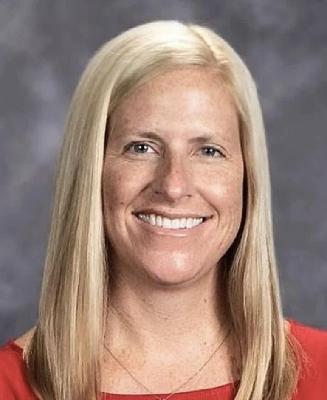
Carol Rofstad was a bright and ambitious 21-year-old with long blonde hair who was studying psychology at Illinois State University in Normal, Illinois. Friends and family remembered her as a confident and hardworking young woman. Instead of going home to Elk Grove Village for the 1975 holiday break, Carol, a junior, stayed on the nearly deserted campus to earn extra money working at a retail clothing store. She was a member of the Delta Zeta sorority and was looking forward to her future.
The night of December 22, 1975, was frigid. After her shift, Carol met a friend at a local venue called The Cellar. Afterwards, they walked a short distance together before parting ways. Carol was last seen walking alone toward the Delta Zeta sorority house at 602 S. Fell Street. She never made it inside. Around noon the next day, December 23, a passerby heard faint moans and discovered Carol lying unconscious in the yard beside the house. She had been brutally beaten in the head. Near her body, investigators found what they believed to be the murder weapon: an 18-inch piece of a railroad tie, covered in blood. Carol was rushed to the hospital for emergency surgery, but her injuries were too severe. She died on Christmas Eve, December 24, 1975.
The Normal Police Department launched an investigation into the homicide. An autopsy confirmed Carol died from the blunt force trauma to her head. Robbery was not considered a motive, as money was found in her purse, and there was no evidence of sexual assault. Investigators learned that two white males, estimated to be between 18 and 25 years old, were seen near the sorority house between 10:00 and 10:15 p.m. on the night of the attack. One of the men was reportedly carrying a club. Two women who were inside the sorority house at the time told police they neither saw nor heard anything unusual.
Tragically, this was not the first time Carol had been attacked in her sorority house. In July 1974, about 17 months before her murder, an intruder broke into the house around 3 a.m. by smashing a window in the back door and cutting a phone line. The man entered Carol’s upstairs bedroom, placed his hand on her throat, and when she screamed, he covered her mouth and threw her against a chest of drawers, breaking her nose. The attacker fled and was never identified. This earlier assault added a chilling layer to the subsequent murder investigation, raising questions about a possible connection.
For decades, Carol's case grew cold, filed away with boxes of records but never closed. Over the years, investigators interviewed numerous people and followed multiple leads, but no charges were ever filed. In the early 2000s, some evidence was sent to the FBI for analysis, but the results were never publicly released. The case has been plagued by questions and criticism from family and advocates, particularly concerning the handling of evidence. According to police reports uncovered by podcasters, the suspected murder weapon was given to a college professor sometime in the 1990s and has been permanently lost.
In recent years, renewed attention has been brought to the case through the efforts of online advocates and the podcast "Carol's Last Christmas." The podcast's producers conducted a two-year investigation, uncovering what they describe as missteps and missed opportunities by law enforcement. A Facebook group, "Who Killed Carol Rofstad?," was started by a then-ISU student to share information and ensure Carol is not forgotten. These efforts have helped bring the case back into the public consciousness and have put pressure on both the university and the police department. Advocates have also successfully campaigned for Illinois State University to award Carol her psychology degree posthumously.
Carol's family has been devastated by her loss and the lack of answers. Her sister, Laura Kuhn, has expressed the family's ongoing pain, noting her parents died without ever seeing justice for their daughter. "The person(s) responsible are probably still alive and out there somewhere without paying for the murder of a fellow ISU student who was a wonderful daughter, sister and a friend of many," she said in a statement. "We are still looking for any information that might possibly be of help regarding this crime."
As of December 2025, the Normal Police Department confirmed the case remains open and active. Investigators state they continue to re-examine the file, conduct interviews, and work with forensic labs, hoping that advances in technology might finally provide a breakthrough. A person of interest, a former ISU student association president, died in September 2024, a development that frustrated podcasters who believed he was a prime suspect. A reward of up to $1,000 is available for information. Anyone with information is urged to contact the Normal Police Department at 309-454-9535 or McLean County Crime Stoppers at 309-828-1111.