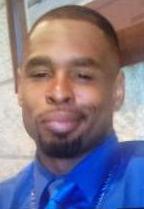
In the tough neighborhoods of north Harbor City in Los Angeles, a different kind of violence arrived in the early months of 1993, one that unnerved even crime-weary residents. A serial killer began targeting Black men in a series of random, unprovoked drive-by shootings. The third and final man to lose his life was Joseph Alexander Maxwell, a 26-year-old Male who had moved to California from Alabama in his late teens.
His death on April 15, 1993, was part of a string of attacks that spread fear throughout the community.
Joseph was building a life for himself and his young daughter. He worked at the Long Beach shipyard, cleaning equipment, and was known for his dedication to his child. According to his close friend, Majon "Little One" Scott, Joseph's 4-year-old girl had been abandoned by her mother at birth, and he was her primary provider. He often worked overtime to ensure he could give her the best life possible. "He wanted the best for his little girl," Scott recalled. On his days off, Joseph enjoyed riding his mountain bike, sometimes pedaling as far as Magic Mountain. He had a distinct country accent from his Alabama roots.
On the evening he was killed, Joseph was in Harbor City visiting his girlfriend. He was standing in the 1000 block of West 254th Street when a man in a car beckoned to him. As Joseph approached the vehicle, the driver shot him. The location was just a short walk from where the serial shooter had claimed his first two victims. The method was tragically familiar: the killer would lure his victims to his car as if to ask a question and then open fire without warning.
The series of shootings began on January 31, 1993, with the murder of 32-year-old Howard L. Campbell. Just two weeks later, on February 14, 35-year-old Michael Kevin Meador was killed at the exact same address. Joseph's murder in April marked the third fatality in the same small, three-block radius. The community, predominantly African-American and Latino, was left terrified by the seemingly random executions carried out by a man witnesses described as white with reddish hair.
The break in the case came on May 22, 1993, when the gunman shot a 38-year-old man three times in the same neighborhood. This victim survived and was able to provide police with a detailed description of his attacker and the vehicle: a red Jeep, possibly with a white top, driven by a white male between 25 and 35 years old with red hair. This matched descriptions from witnesses of the other shootings, allowing police to connect the four attacks and create a composite sketch of the suspect, who became known as the Harbor City serial shooter or The 253rd Street Killer.
Despite the detailed description and the tight geographical pattern of the crimes, the killer was never identified. Investigators ruled out robbery as a motive, as nothing was ever taken from the victims. Police were unsure if the shootings were racially motivated, but all the victims were Black men. "This is an ugly case and has the potential for creating well-reasoned fear throughout the community," LAPD Lt. Sergio Robleto said at the time, urging residents to be cautious and for any witnesses to come forward.
The death of Joseph Alexander Maxwell was a profound loss. His friend Majon Scott, standing on the corner where the other men were shot, was filled with sorrow. "He had it all right. I feel bad. It could have been me," he said with tears in his eyes. "I miss him." Joseph was buried in his home state of Alabama, leaving behind a young daughter who lost her devoted father to a senseless act of violence. The case of the Harbor City serial shootings remains cold, and the identity of the man who took three lives and wounded another is still a mystery.