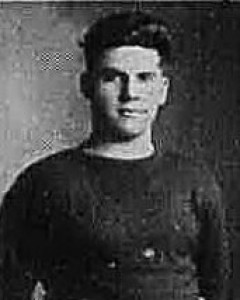
On a frigid winter evening in the Black Hills of South Dakota, Butte County Sheriff Dave Malcom was just over a year into the job he had been elected to in 1945. A 57-year-old Scottish immigrant and decorated veteran of World War I, Malcom was a man who had worn many hats before pinning on the sheriff's badge: farmer, miner, and deputy sheriff. He was building a life with his wife, Edith, and their nine-month-old daughter.
But that life was stolen in a burst of gunfire on January 24, 1946, when Sheriff Malcom was killed in the line of duty.
The man who shot him was George Sidney Sitts, a 32-year-old fugitive and serial killer. Sitts's path to South Dakota began weeks earlier in Minnesota, where he had murdered a liquor store clerk, Erik Johansson, during a robbery on December 12, 1945. Though quickly captured and convicted, Sitts was not destined for a life sentence. The day before he was to be transferred to a state prison, he and three other inmates escaped the Minneapolis city jail after spending weeks sawing through their cell bars. Sitts fled west, eventually making his way across South Dakota.
On that cold January night, Sheriff Malcom and State Division of Criminal Investigation Agent Thomas Matthews, 48, were working together. They had been alerted that an armed and dangerous fugitive, driving a green 1940 Ford, was in their area. The two lawmen set up a roadblock at the intersection of Highways 14 and 85, just north of Spearfish, to check for the suspect. Around 7 p.m., as they stopped a vehicle matching the description, Sitts emerged from the car and opened fire. He shot Sheriff Malcom first, then turned his gun on Agent Matthews. A nearby truck driver heard the shots, which he mistook for a car backfiring, and saw a figure kneeling over one of the fallen officers before driving away. Sitts had executed both men, shooting each in the head, before stealing Matthews' sidearm and wallet and vanishing into the darkness.
The double murder of two respected lawmen triggered one of the largest manhunts the region had ever seen. Hundreds of officers from multiple states descended on the Black Hills, searching isolated cabins and shacks in the rugged terrain. The search for Sitts was relentless, fueled by a reward fund started by a local newspaper. For eleven days, Sitts managed to evade capture, at one point kidnapping a gas station attendant and forcing him to drive to Wyoming before releasing him unharmed. The massive search finally ended on February 5, 1946, near Lysite, Wyoming, when Sitts, mistaking law enforcement for local ranchers, was apprehended without a fight.
Extradited back to South Dakota, George Sitts was put on trial in Deadwood for the murder of Agent Thomas Matthews. The state chose to prosecute that case first. The jury took less than three hours to find him guilty of first-degree murder on March 22, 1946. Eight days later, the judge sentenced him to die. With a death sentence secured, the state decided it was not necessary to try Sitts for the murder of Sheriff Malcom.
On April 8, 1947, George Sitts was executed at the South Dakota State Penitentiary in Sioux Falls. Defiant to the end, his last words to the 41 witnesses were a grim joke: "This is the first time authorities helped me escape prison." He was the first and only person to be executed in South Dakota's electric chair, a device handmade by prisoners. The switch was flipped by DCI Agent Floyd Short, a personal friend of both slain officers.
Dave Malcom was laid to rest at Pine Slope Cemetery in Belle Fourche. He was remembered as a devoted husband and father, a veteran, and a dedicated public servant. Years later, the community he served has not forgotten his sacrifice. A portion of Highway 85, near the site of the ambush, has been dedicated to the memory of both Sheriff Dave Malcom and Agent Thomas Matthews, a permanent reminder of two heroes who gave their lives to protect their community from a ruthless killer.