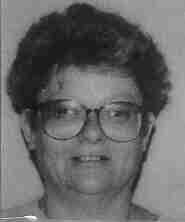
A fresh start for Rita Ann Bado and her daughter, Lisa, meant leaving their lifelong home of Torrington, Connecticut, and moving south to the sunshine of Lantana, Florida. About a year before their deaths, the mother and daughter settled into the Runaway Bay apartment complex, eager to build a new life. Rita, a 45-year-old female, had recently divorced after a 22-year marriage and, with her son Alan serving in the military, it was just her and 20-year-old Lisa.
Rita was a dedicated mother and a hard worker, taking a job as a cashier at a Walmart in nearby Delray Beach. Lisa, a passionate tennis player, enrolled as a culinary student and worked part-time at Charlie's Crab restaurant in Palm Beach, saving up and proudly contributing to the household.
The new life they were building together came to a brutal and sudden end on August 22, 1992. When Rita failed to show up for her shift at Walmart, her brother, Thomas Bado, grew worried. He and his wife drove the short distance to the apartment. When no one answered his calls or knocks, he used his spare key to enter. The scene inside was one of chaos and horror. In the master bedroom, he discovered the bodies of his sister and niece. Both Rita and Lisa had been bound, sexually assaulted, and shot to death.
The Palm Beach County Sheriff's Office arrived to a crime scene that was particularly vicious. The investigation, however, was immediately hampered by a force of nature. Just as detectives began their work, Hurricane Andrew, a massive Category 5 storm, was bearing down on South Florida. The impending hurricane forced evacuations, scattered potential witnesses, and diverted law enforcement resources, effectively silencing the flow of information that is crucial in the first 48 hours of a homicide investigation. The storm overshadowed news of the double murder, and despite the case being featured on "A Current Affair" the following year, it quickly went cold.
Investigators had little to go on. There were no signs of forced entry, and few valuables were taken, though Lisa’s black Honda CR-X was missing. It was found a few days later outside a warehouse in Hypoluxo. The initial detective on the case, Clarence Backherms, had an early suspect in mind: a transient criminal named James Anthony Frederick, who was known to use multiple aliases including David Anthony Fenton. The gun used to kill the Bados was similar to one Frederick had used in another robbery. However, without concrete evidence, the suspicion remained just that. The key to solving the case lay waiting in a box, collected from the crime scene: four cigarette butts and a single hair that did not belong to either victim.
For nearly a decade, the case sat unsolved. Then, advancements in forensic science provided a new path forward. In 2003, DNA from the cigarette butts was uploaded to the national Combined DNA Index System (CODIS). The result was a direct match to James Anthony Frederick, who was already incarcerated in Wisconsin, serving a 97-year sentence for armed robbery and other felonies he had committed there in 1995. Investigators from Florida traveled to Wisconsin to question him, but he remained uncooperative. The DNA, however, was undeniable.
Frederick was extradited to Florida and charged with the murders of Rita and Lisa Bado. In November 2005, faced with the irrefutable DNA evidence, he pleaded guilty to two counts of first-degree murder. He was sentenced to two consecutive life sentences, to be served after he completes his prison term in Wisconsin around 2065. As part of the plea deal, charges of sexual battery, burglary, and kidnapping were dropped. The investigation also connected Frederick to a third homicide in Palm Beach County. DNA linked him to the December 1991 stabbing death of Martin Gatto, a 40-year-old courthouse clerk. Though charged, he was never tried for Gatto's murder, as he was already set to spend the rest of his life in prison. James Anthony Frederick, a serial killer who moved through the country under various names, was finally held accountable for the lives he destroyed, closing a painful chapter for a family that waited more than a decade for justice.