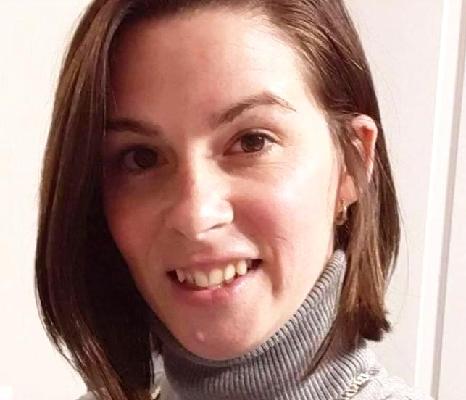
In the late summer of 2000, the life of a young woman named Sia Demas was brutally cut short. At just 21 years old, Sia became the second known victim of a serial killer who preyed on vulnerable women in South Florida. Her story is one of a life ended with tragic violence, and a decades-long quest for answers that would stretch across continents and end with a bizarre twist of fate.
On August 9, 2000, a person walking their dog along a roadside in Dania Beach, Florida, made a horrifying discovery. Discarded in the grass was a black duffel bag, and inside was the body of Sia Demas. Investigators determined she had been beaten to death. The callous manner in which she was left highlighted the killer's utter disregard for human life.
Her death came just weeks after another woman, 35-year-old Kimberly Dietz-Livesey, was found dead under similarly grim circumstances on June 22, her body crammed into a suitcase and abandoned in nearby Cooper City.
The investigation into Sia’s murder revealed that she, like Kimberly, had been struggling with substance abuse and was involved in prostitution to support her habit. Detectives learned that Sia may have frequented the Knight's Inn on Biscayne Boulevard, an area known for drug activity. A witness later told police she saw Sia get into a dark-colored pickup truck with a man who had flashed a large amount of cash. It was the last time anyone reported seeing her alive. For years, her case, along with Kimberly's, remained cold, leaving a painful void for those who knew her and a lingering fear in the community.
The break in the case wouldn't come for more than a decade. The similar patterns in the murders of Sia and Kimberly, and a third murder in 2001, led investigators to suspect a single person was responsible. On August 30, 2001, the body of 24-year-old Jessica Good was found floating in Biscayne Bay, having been fatally stabbed. Suspicion quickly fell on a Brazilian national living in Miami named Roberto Wagner Fernandes. He worked as a tour bus driver and flight attendant. However, before he could be questioned, Fernandes fled the United States and returned to Brazil just days after Good's murder.
Fernandes had a violent past. In 1996, he had been charged with the murder of his wife in Brazil but was acquitted after claiming self-defense. This history, combined with evidence from the Miami crime scene, made him a primary suspect. In 2011, a major breakthrough occurred when DNA from the Jessica Good case was matched to DNA found at the scenes of both Sia Demas's and Kimberly Dietz-Livesey's murders. Furthermore, fingerprints from the crime scenes matched prints taken from Fernandes after his wife's death. The link was definitive: Roberto Wagner Fernandes was the killer.
When U.S. investigators traveled to Brazil to seek DNA from Fernandes, they learned he was already dead. After returning to Brazil, Fernandes reportedly became the target of his former wife's family, who may have hired someone to kill him in retaliation. Fearing for his life, Fernandes attempted to flee to Paraguay in 2005, but the small plane he was on crashed, killing him. Skeptical that the killer might have faked his death, detectives from Broward County and Miami, with cooperation from the U.S. Department of Justice, the FBI, and Brazilian National Police, undertook the extraordinary step of having his remains exhumed in late 2020.
In August 2021, more than two decades after Sia’s death, Broward Sheriff Gregory Tony announced the conclusive results. DNA taken from the exhumed body was a perfect match to the killer's DNA profile from all three crime scenes. "This suspect Roberto Fernandes was indeed responsible for the brutal murder of all three of these women," Tony stated at a press conference. The case was officially closed, with the primary suspect deceased. While the man responsible for her death never faced a jury for his crimes, the tireless work of investigators finally brought a measure of justice and certainty to the families of Sia Demas and the other victims.