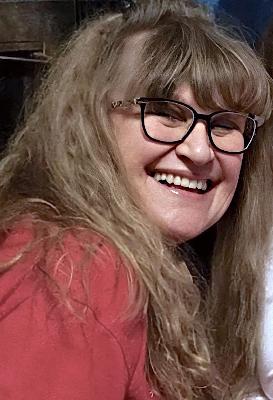
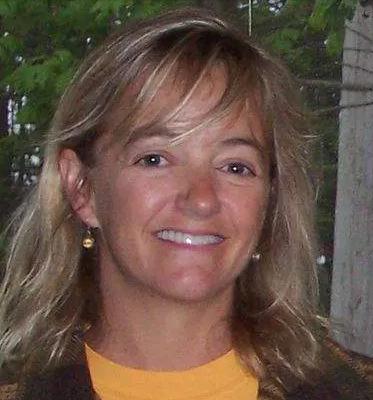
For more than two decades, the brutal killing of Kimberly Dietz-Livesey remained a painful mystery for her family, a cold case that haunted detectives in South Florida. A 35-year-old mother, Kimberly was remembered by those who loved her as a kind, free-spirited woman with a ready smile. She managed a GNC health store and was an active member of Bikers in Recovery. Yet, she also wrestled with an inner turmoil, battling long-standing addictions to drugs and alcohol.
Her personal mantra, "Today is a better day than yesterday," hinted at this ongoing struggle. In the time leading up to her death, she had recently separated from her husband, Michael Livesey, after a relapse.
On June 22, 2000, two passersby in Cooper City, Florida, made a gruesome discovery along a roadway: a brown suitcase. Inside, they found the nude body of Kimberly Dietz-Livesey. Her family’s worst fears were confirmed when news reports described her distinctive rose tattoos. Michael Livesey, a recovering alcoholic who had met Kimberly at an Alcoholics Anonymous meeting three years prior, was devastated. "I cried and cried," he later recalled. "No one deserves that." He was left to care for their 16-month-old daughter, Victoria, and began collecting photos and news articles for her, determined that she would one day know about her mother.
The investigation into Kimberly’s murder presented an immediate challenge for detectives. Weeks later, on August 9, 2000, the body of another woman, Sia Demas, was found stuffed into a duffel bag along a road in nearby Dania Beach. The following year, on August 30, 2001, the body of a third victim, Jessica Good, was recovered floating in Miami's Biscayne Bay. All three women had struggled with drug addiction. As detectives from the Broward Sheriff's Office and Miami Police Department began to collaborate, they noticed similarities in the cases. DNA evidence collected from all three crime scenes pointed to a single, unknown man, and fingerprints from two of the scenes were a match. Still, the killer’s identity remained a mystery.
A major break in the cold case came in 2011. DNA from the Miami homicide of Jessica Good was matched to the unknown suspect's DNA from the two Broward County murders, officially linking the three killings. Investigators also matched fingerprints from the crime scenes to Roberto Wagner Fernandes, a Brazilian citizen who had lived in Miami. Fernandes had become a person of interest after Jessica Good's murder, and it was discovered he had fled the United States for Brazil just days after her body was found. Further investigation revealed that Fernandes had been acquitted of his wife's murder in Brazil in 1996, claiming self-defense.
The pursuit of justice became an international effort. When U.S. investigators traveled to Brazil to find Fernandes, they learned he had reportedly died in a plane crash in 2005 while flying to Paraguay. Authorities believed he was fleeing Brazil because his late wife's family, angered by his acquittal, may have sought retaliation. Unsure if Fernandes had faked his death to escape justice, detectives worked for years with the U.S. Department of Justice, the FBI, and Brazilian National Police to confirm his fate.
Finally, in late 2020, Brazilian authorities granted permission to exhume Fernandes's remains. DNA samples taken from the body were a conclusive match to the profile of the unknown killer in all three South Florida murders. On August 31, 2021, Broward Sheriff Gregory Tony announced that Roberto Wagner Fernandes was the man responsible for the brutal slayings of Kimberly Dietz-Livesey, Sia Demas, and Jessica Good. Though he died before he could be brought to trial, the identification of the serial killer brought a long-awaited resolution. For Kimberly’s ex-husband, who never gave up hope, the news provided a measure of peace after an agonizing period of uncertainty. "My heart goes out to the loved ones of every victim," Michael Livesey said. "I hope this gives them a sense of closure as it does to me."