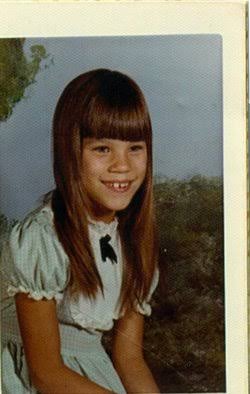
In the summer of 1984, a shadow fell over the historic Gold Rush town of Placerville, California, as a series of disappearances instilled fear in the small community nestled in the foothills of the Sierra Nevada. Among the victims was Debbie Galston, a 14-year-old female who, along with her twin sister, had faced a difficult childhood that led them to a local foster home. The sisters were two of a set of triplets.
Described as shy and trusting, their lives were cut short by a man who would come to be known as "The Forest Killer."
Debbie and her sister Denise were living in a foster home run by Nona Chapman in Placerville. Their young lives had already been marked by hardship, but in the summer of 1984, they were thrust into a terrifying ordeal. On June 12, 1984, Denise vanished while hanging out with friends at a local spot called the Bell Tower. Her disappearance was the first in a string of events that would grip the town with fear. For weeks, there was no sign of her, and many initially believed she might have run away.
The grim reality of the situation began to unfold on July 31, when a logging crew discovered partial human remains in the dense Eldorado National Forest. Dental records would later confirm the remains belonged to Denise Galston. Just five days later, the body of another missing teenager, 18-year-old Lynda Burrill, was found in the same forest. The community was shaken, and investigators quickly concluded that a serial killer was preying on the area's young women.
Amid this growing panic, Debbie Galston disappeared on the evening of August 8, 1984. She had been on her way to a party and was never seen alive again. The search for Debbie was extensive, and while some of her clothing was found along a highway in September, her fate remained unknown for months. Finally, on October 27, 1984, her skeletal remains were discovered, bringing a tragic end to the search. She was the last of the killer's victims to be found.
The investigation into the murders led police to Michael Anthony Cox, a local forestry worker who was acquainted with the Galston sisters. Cox, born in 1956, had a troubled past and was known for his derogatory and threatening comments towards the victims. A critical breakthrough came when a 17-year-old girl who also lived at the foster home, Joanna Napoletano, came forward. She testified that she had witnessed Cox stab Denise to death on the night she disappeared but had remained silent out of fear. Another resident of the foster home, Darlene S., who was Cox's girlfriend at the time, later testified that he had confessed to killing all three girls.
Michael Anthony Cox was arrested on November 10, 1984. In the summer of 1985, he was convicted of three counts of first-degree murder with special circumstances. The prosecution's case relied heavily on the testimony of the two teenage girls from the foster home, as no physical evidence directly linked Cox to the crimes. Despite his lawyers highlighting his troubled childhood during the penalty phase, the jury sentenced him to death on August 7, 1985. Cox was sent to San Quentin State Prison, where he remains on death row. The case, however, has seen controversy over the years, with the two main witnesses recanting their testimonies decades later, claiming they were pressured by police.