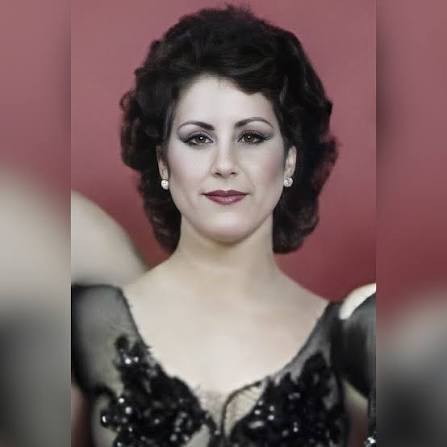
Julie Ann Souza was a 53-year-old White woman who was known to frequent the bustling Fashion District in downtown Los Angeles. Police described her as a transient who kept to herself, often seen in the area of Santee Alley, a vibrant and crowded pedestrian corridor famous for its clothing and accessory shops. According to one detective, she was "pretty much a loner." While her life on the streets made her vulnerable, nothing could have prepared the community for the brutal violence that ended her life.
On the morning of Sunday, December 12, 2010, a security guard made a grim discovery in the 200 block of East Olympic Boulevard. Hidden beneath a blanket was the body of Julie Souza. The Los Angeles Police Department and coroner’s officials were called to the scene, and she was pronounced dead at 12:05 p.m. An investigation by the coroner determined that Souza had been beaten, sexually assaulted, and ultimately strangled to death.
The violent and callous nature of the crime sent a chill through the downtown community.
The case was immediately assigned to the elite Robbery-Homicide Division of the LAPD, which handles the city's most complex and high-profile murder investigations. Detectives began the difficult work of piecing together Souza’s final hours in a dense urban environment with few initial witnesses. The investigation relied heavily on forensic evidence, and a significant breakthrough came when DNA collected from the crime scene pointed to a potential suspect: a man named Anthony Bryce Jones.
Despite the DNA match, investigators did not make an immediate arrest. In 2013, the LAPD publicly identified Jones as a "continuing person of interest" but did not have enough evidence to formally charge him with the crime. The case grew cold as detectives struggled to find the additional information needed to secure a conviction. The challenges of investigating a crime against a member of the homeless community, who often have limited social networks and are less visible to the public, were significant.
In an effort to generate new leads, the Los Angeles City Council, at the request of the police department, approved a $50,000 reward in August 2013. Detectives Steven Eguchi and Greg Stearns held a news conference to announce the reward, hoping it would encourage someone with knowledge of the crime to come forward. They asked for the public’s help in bringing justice to Souza and her family, emphasizing the brutal nature of the attack.
As of the latest available information, the murder of Julie Ann Souza remains unsolved. No arrests have been made, and no charges have been filed in connection with her death. Anthony Bryce Jones was named as a person of interest, but his involvement has never been officially confirmed through legal proceedings. The $50,000 reward for information leading to the arrest and conviction of her killer is believed to still be active. The Los Angeles Police Department encourages anyone with information, no matter how insignificant it may seem, to contact the Robbery-Homicide Division or to leave an anonymous tip with Crime Stoppers at (800) 222-8477.