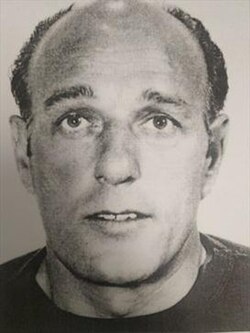
Barry Sherman, a 75-year-old man and the billionaire founder of the Canadian generic-drug company Apotex, was found dead with his wife, Honey Sherman, inside their Toronto home on December 15, 2017. Police were called to the residence near Old Colony Road and Gerald Street shortly before 1 p.m. after the couple was discovered in the lower-level swimming-pool area. Honey was also dead at the scene.
The discovery immediately drew intense attention because of the Shermans’ prominence in Canadian business and philanthropy and because of the unusual circumstances surrounding the bodies.
The Shermans had been positioned side by side near the indoor pool. Investigators said they were found in a semi-seated position on the pool deck, with belts around their necks that were attached to a low railing surrounding the pool. Both remained fully clothed. Post-mortem examinations determined that each had died from ligature neck compression. Although their bodies were not discovered until December 15, investigators subsequently determined that they had last been seen alive during the evening of December 13 and believed the killings occurred around that time.
The strange scene initially created uncertainty about exactly what had happened. Early media reports indicated that investigators were considering the possibility that Sherman had killed his wife before taking his own life, a theory the Sherman family strongly rejected. The family retained its own forensic experts and former homicide investigators to conduct an independent investigation. After weeks of police work, Toronto homicide investigators publicly announced in January 2018 that both deaths were homicides and that Barry and Honey had been deliberately targeted.
There were no obvious signs of forced entry into the residence, adding another mystery to the investigation. Police collected nearly 150 packaged or bulk exhibits, obtained roughly four terabytes of security-camera footage from the surrounding area, interviewed more than 100 witnesses and obtained numerous judicial authorizations and search warrants. The inquiry was complicated in part by the enormous amount of personal, financial and business information connected to Sherman and Apotex. Despite the scale of the investigation, police did not publicly establish a motive or identify a charged killer.
As the investigation continued, detectives examined numerous people who might have information about the murders. Toronto police later clarified that multiple persons of interest had been investigated and either remained under examination or were being assessed so detectives could determine whether they could be excluded. No publicly named individual emerged from those inquiries as an accused person, and no arrest resulted.
A significant development came in December 2021, when Toronto police released surveillance footage of an unidentified person seen in the Shermans’ neighbourhood around the period investigators believe the murders occurred. Detectives went beyond describing the individual as merely a person of interest and classified the person as a suspect. The individual was recorded entering a narrowly defined area surrounding the Sherman residence, remaining there for what investigators considered a suspicious period of time, and then leaving. Police said they had been unable to establish any legitimate purpose for the person being there.
The surveillance images did not provide investigators with a clear face, forcing police to concentrate on the person’s physical movements. Analysis placed the suspect at approximately 5 feet 6¾ inches to 5 feet 9½ inches tall. Investigators urged viewers to pay particular attention to the person’s distinctive gait and walking style, including the movement of the right foot. Police acknowledged that there could be an innocent explanation for the person’s presence and asked the individual to come forward so investigators could either pursue or eliminate that possibility. The person has not been publicly identified.
The Sherman family also offered a multimillion-dollar private reward for information that could solve the murders, reflecting both the difficulty of the investigation and the family’s continued effort to obtain answers. A privately funded investigation involving experienced homicide investigators and forensic specialists eventually concluded, with information gathered through that effort provided to police, while the official Toronto Police investigation continued.
Despite years of investigative work, no person has been arrested, charged, tried or convicted for killing Barry and Honey Sherman. Toronto Police Service continues to list both deaths among its current homicide investigations, and Barry Sherman remains designated as Homicide #64/2017, with Honey Sherman designated as Homicide #65/2017. The unidentified individual captured on surveillance remains the most significant publicly disclosed suspect in the case, while the identity of whoever killed the Shermans and the motive for the targeted double homicide remain unresolved.