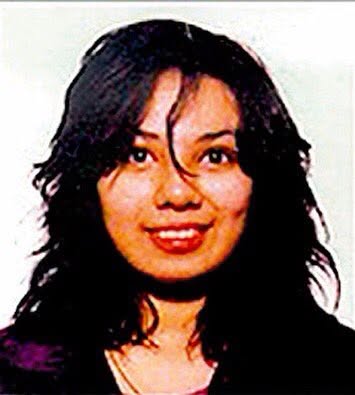
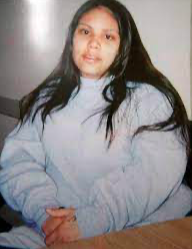
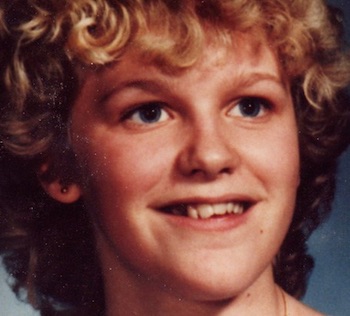
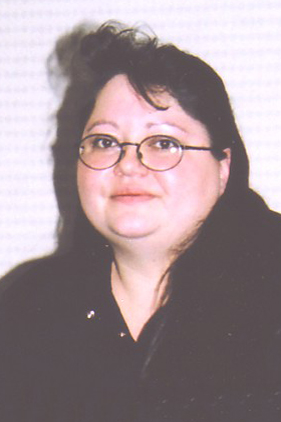
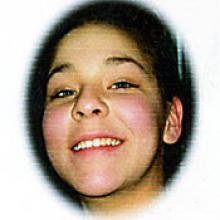
Sherri Leigh Green, a 39-year-old White/Caucasian woman from Brandon, Manitoba, was found dead on September 17, 2009, inside her family’s cabin in the Old Campground area of Wasagaming in Riding Mountain National Park. One of her sisters and her brother-in-law reportedly discovered her there. At about 7:30 that evening, members of the Wasagaming RCMP were dispatched to what was initially described as a suspicious death.
The investigation quickly expanded beyond the local detachment as police tried to determine what had happened inside the cabin.
Green had deep connections to Brandon and to the Riding Mountain area. Born in Brandon on August 23, 1970, she was the youngest of three daughters. She studied at Assiniboine Community College and earned a nurse’s aide certificate, then spent roughly a decade working in home care. Later, she changed careers, attended trucking school, obtained her Class 1-A licence and spent the final four years of her life working as a long-haul truck driver. She also volunteered at Brandon General Hospital, was involved with St. John Ambulance and helped with community Christmas meals. Riding Mountain National Park was a place she enjoyed visiting for scenic drives, camping and other outdoor activities, making the setting of her death particularly significant to those who knew her.
An autopsy was conducted at Winnipeg’s Health Sciences Centre on September 19. After the examination, RCMP publicly confirmed that Green’s death was a homicide. Investigators deliberately withheld the cause and manner by which she was killed, information that has remained closely guarded as an investigative detail. The early investigation involved Wasagaming and Yellowhead RCMP, the Dauphin forensic identification unit, the Brandon Major Crimes Unit and the Winnipeg Serious Crimes Unit. Authorities appealed for anyone who had information about Green’s final days or the circumstances at the cabin to contact police.
Public attention later focused in part on Mark Williton, an Ontario long-haul trucker who described himself as Green’s boyfriend. Williton was not publicly identified by police as Green’s killer, was not arrested, and was not charged. His name entered the coverage after he sent Green’s family and the media a letter denying that he was responsible for her death. He said he and Green had known each other for about two years and had recently discussed marriage. According to his account, the two had looked at rings in Brandon on September 10, and he had purchased a diamond-and-gold promise ring that was left with the jeweller to be sized.
Williton said he and Green spent the weekend immediately before her death together at the Wasagaming cabin, arriving on September 11 and leaving together on September 13. He said they walked around Clear Lake and discussed wedding plans. According to Williton, he last saw Green on September 13 after they travelled back to a Brandon truck stop, where he retrieved his truck and departed on a work trip. He said Green returned to the cabin and that he later spoke with her by telephone while she was there. Williton claimed he subsequently drove to Aberdeen, Washington, arriving there on September 17, and then travelled to California. He said a work acquaintance informed him of Green’s death on September 19 while he was still in California.
Williton said RCMP contacted him on September 20 or 21 and that he returned to Winnipeg, where he gave investigators a statement on September 23. He told the media that police never informed him he was a suspect or that he was under arrest, and he said he offered investigators access to his cellphone records. Although Williton said he had been told Green’s relatives believed he could have been responsible, one of Green’s relatives subsequently told the press that the family was not singling out any particular individual. The relative explained that, in the immediate aftermath, the family considered anyone who had recently been in contact with Green as someone investigators might need to examine.
No publicly reported arrest followed the investigation, and no person was charged with Green’s homicide. Years after her death, RCMP were still seeking information, and the case continued to be described as an unsolved homicide. Police have never publicly disclosed how Green was killed, leaving one of the most fundamental details of the crime known only to investigators and anyone directly involved in her death. The continuing withholding of that evidence may allow investigators to evaluate future statements or tips against facts that have never entered the public record.
Green’s death left her family without an arrest, prosecution or trial to explain who killed her or why. What began with the discovery of her body in a family cabin at a place she had enjoyed visiting became a long-running Manitoba cold case. Despite the extensive initial RCMP response, forensic work, interviews and public appeals for information, the available public record contains no identified person who has been charged or convicted in connection with her killing, and her homicide remains unresolved.