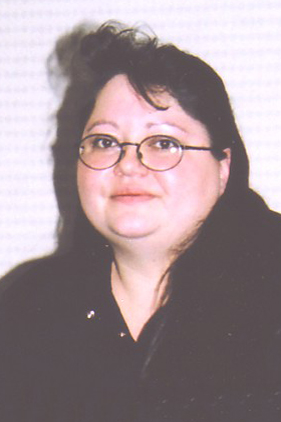
Kerrie Ann Brown was a 15-year-old girl living in Thompson, Manitoba, and attending R.D. Parker Collegiate when she disappeared on the night of October 16, 1986. She had been at a house party on Trout Avenue with friends on a Thursday night when school was not scheduled for the following day. Kerrie planned to spend the night at the home of her close friend Nicole Zahorodny.
During the party, she became upset after encountering a former boyfriend with another girl and decided she wanted to leave.
As Kerrie and Nicole were leaving, Nicole realized she had forgotten her purse and went back inside to retrieve it. Kerrie remained outside. When Nicole returned only a short time later, Kerrie had vanished. Accounts of the investigation indicate that footprints in the snow led away from the residence toward the roadway, but there was no confirmed explanation for where she went next or who she may have encountered. RCMP later placed her departure from the party at approximately 11:45 p.m.
Kerrie did not return home, and her family and friends began searching for her. On the afternoon of October 18, two women riding horses in an isolated area outside Thompson discovered her body near a hydro transmission corridor and horse-stable area north of the city. Although October 18 is sometimes listed as the date associated with her death because that was when she was found, investigators have long believed she was attacked shortly after disappearing late on October 16 or during the early hours of October 17.
The scene revealed that Kerrie had been sexually assaulted and subjected to a severe beating. Police reported that she had been bludgeoned, with extensive injuries concentrated around her head and face. The violence of the attack and evidence recovered from the scene led investigators to treat her disappearance almost immediately as a homicide. The location was remote, particularly in the cold autumn weather, but investigators learned that vehicles had been seen in the area around the time Kerrie vanished.
Witness information became an important part of the early investigation. Reports described a vehicle in the vicinity of the body site at approximately 1 a.m. on October 17. Other accounts referred to both a car and a van near the horse-stable access area. One vehicle became particularly significant because witnesses associated it with a local man who soon drew intense police scrutiny. The van described by witnesses was never conclusively identified.
Within roughly a week of the killing, police arrested Patrick Sumner, a Thompson resident who was then in his early twenties. He was charged with first-degree murder. The case against him was largely circumstantial and proceeded to a preliminary hearing, the stage at which a judge determines whether there is enough admissible evidence to send an accused person to trial. After a three-day hearing that concluded in February 1987, the judge found the evidence insufficient to commit Sumner to trial, and he was discharged. He was therefore never tried or convicted of Kerrie's murder.
The case against Sumner weakened further as forensic technology advanced. Later DNA testing excluded the original accused from biological evidence associated with the investigation, according to reporting on the case. Investigators also determined that DNA recovered in connection with the crime pointed toward at least two male contributors, reinforcing the possibility that more than one person participated in Kerrie's assault and killing. The RCMP has publicly described multiple offenders as a definite possibility, although investigators have not publicly identified the individuals represented by those DNA profiles.
Over the ensuing decades, investigators repeatedly revisited the original evidence. The RCMP Historical Case Unit undertook renewed work on the homicide, applying newer forensic methods and collecting comparison DNA from people associated with the investigation. Police have continued to examine whether Kerrie was attacked by someone she knew or whether the encounter was random, and they have declined to rule out either possibility. Despite the enormous volume of interviews, physical evidence and investigative material accumulated since 1986, those efforts have not produced another prosecution.
The RCMP also tried unconventional methods to revive public interest. Around the 30th anniversary of Kerrie's disappearance, police used social media to reconstruct the events of her final day, hoping that renewed attention might prompt someone with information to come forward. Investigators reported receiving additional tips following the campaign. The case later became the subject of an extensive CBC investigation, which again examined witnesses, possible suspects, forensic evidence and concerns surrounding the original investigation. None of that renewed attention resulted in criminal charges.
Nearly four decades after Kerrie disappeared from the Thompson house party, her murder remains unsolved. Manitoba Crime Stoppers continues to list the case as an unsolved homicide, and reporting as recently as 2025 continued to describe it as an unresolved cold case. Patrick Sumner remains the only person known to have been formally charged, but his case ended at the preliminary-hearing stage and later forensic testing excluded him from DNA evidence. No person has been convicted of Kerrie Ann Brown's sexual assault and murder, and investigators continue to seek information capable of identifying the person or persons responsible.