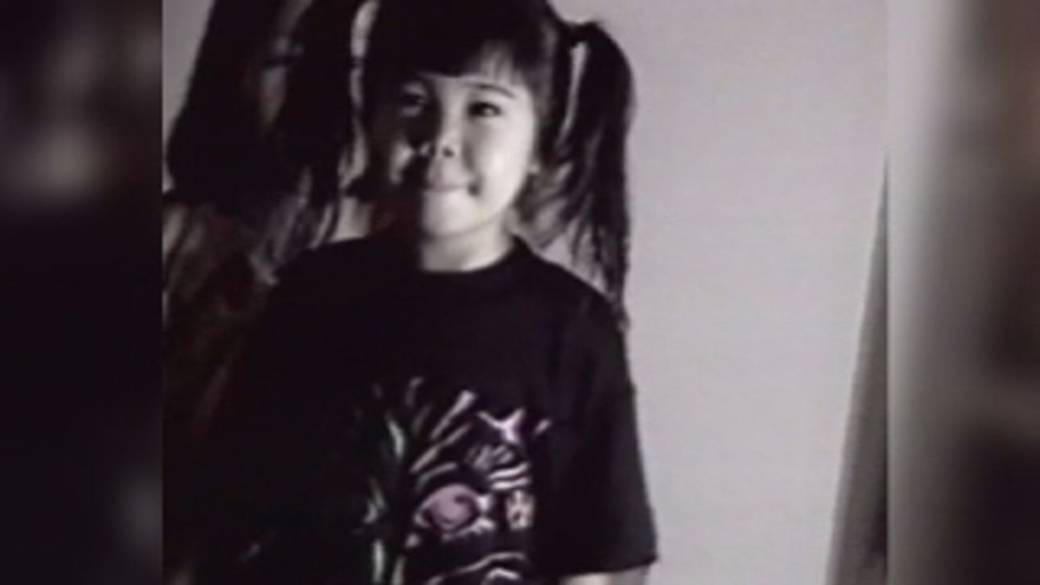
Shana Lee Labatte, a 30-year-old woman and mother of two, was living in the Kamloops area of British Columbia when her life ended violently in March 2004. Although some later reports listed her as 31, contemporary reporting identified her as 30. She worked part-time cleaning at a hotel and was also involved in the street-level sex trade while struggling with drug addiction.
People who knew her said her life had once been relatively stable before addiction increasingly placed her in vulnerable and dangerous circumstances.
During the early morning hours of March 23, Labatte was in downtown Kamloops near Sixth Avenue and Seymour Street, an area she was known to frequent. Investigators eventually determined that she was seen between approximately 4:00 and 5:00 a.m. near the 7-Eleven convenience store. Witness information indicated that she entered a late-model Ford Explorer. That vehicle and the person with her became important parts of the investigation into what happened during the short period between her last known sighting and the discovery of her body.
Later that morning, a couple walking in the Mission Flats area discovered Labatte's body near a trail just west of the pulp mill's effluent ponds. Police treated her death as a homicide. Other reporting indicated investigators believed she had been killed somewhere else before her body was left near the Weyerhaeuser property. The precise cause and manner in which she was killed have not been publicly detailed by police, apparently because investigators retained significant information about the crime as evidence known only to the killer and authorities.
The investigation eventually focused on an unidentified man whose likeness was released in a composite sketch. Police were also attempting to identify the driver of a brown sport-utility vehicle connected to Labatte's final hours. More than three years after the killing, investigators located the man they had been seeking. He admitted that he had spent time with Labatte on the night she was killed and acknowledged that he had been driving the brown SUV police had been trying to identify. Those admissions initially appeared to place him very close to the center of the investigation.
Police nevertheless concluded that the man was not Labatte's killer. He cooperated with investigators, underwent a polygraph examination and was ultimately ruled out as a suspect. No criminal charge was laid against him in connection with her death. His elimination left investigators without a publicly identified suspect despite having reconstructed at least part of Labatte's movements shortly before she was killed.
The killing also occurred during a period when police were confronting other violent deaths and disappearances involving vulnerable women in Kamloops. When Sherri Lee Hiltz was murdered in 2005, investigators examined whether the cases might be connected, and police also considered possible links between the Kamloops cases and killings of sex-trade workers elsewhere in Western Canada. Those inquiries prompted scrutiny of offenders being investigated or prosecuted for similar crimes, but no confirmed serial connection to Labatte's murder emerged.
One of the men examined was Thomas Svekla, who was arrested in Edmonton in 2006 and charged with second-degree murder in an unrelated killing. Svekla was later convicted of murder and declared a dangerous offender, but investigators ultimately ruled him out in relation to the Kamloops killings. Davey Mato Butorac, who was prosecuted for multiple killings of women in British Columbia, also attracted investigative attention because of the similarities between his crimes and unresolved cases involving women in the sex trade. No evidence resulted in Butorac being charged with Labatte's death, and subsequent reporting states that he was cleared as a suspect in the Kamloops cases.
For years afterward, investigators continued to believe there were people who knew more about Labatte's final hours and the person responsible for killing her. Police and Crime Stoppers repeatedly appealed for anyone with information to come forward, emphasizing that even details that seemed insignificant could help investigators reconstruct what occurred after she was seen downtown and before her body was discovered at Mission Flats. Her family continued seeking answers and closure while the case remained open.
On the twentieth anniversary of the killing in March 2024, Kamloops RCMP confirmed that the homicide investigation was still active and again asked the public for information. No arrest, charge, trial or conviction has been reported in Labatte's murder. A 2026 review of the case likewise reported that no charges had been laid. More than two decades after she was found near the Mission Flats trail, the identity of the person who killed Shana Lee Labatte remains unknown.