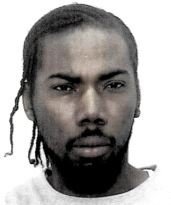
David Buller was a 50-year-old man, an accomplished Toronto artist and longtime University of Toronto fine arts professor whose killing inside his own campus office became an enduring cold case. He worked in the university’s Visual Studies program at 1 Spadina Crescent and was remembered as a dedicated teacher as well as a painter. Although the Toronto Police Service officially lists January 19, 2001, as the date of the homicide, accounts from Buller’s family and investigators indicate that
the fatal attack most likely occurred during the afternoon of January 18, with his body discovered early the following morning. :chatgpt-content-reference
Buller arrived at the university during the afternoon and was seen near the building around 1 p.m. He was scheduled to teach later that day but never appeared for his class. Students who were expecting him were left without an explanation. Sometime during those hours, while Buller was apparently seated at his computer in his secluded office, someone entered and stabbed him repeatedly in the torso. Investigators later reconstructed the scene as Buller falling from his chair during or immediately after the assault, pulling the computer’s power cord loose as he went down. His office door was subsequently left closed, allowing his body to remain undiscovered for hours. :chatgpt-content-reference
At approximately 6:58 a.m. on January 19, police were called to the university building after a caretaker discovered Buller. Emergency personnel attempted to save him, but he was pronounced dead at the scene. Detectives were immediately confronted with an unusually difficult crime scene. There was little obvious disturbance, no murder weapon was recovered, and investigators later said they had no usable DNA evidence and no security-camera footage from the building. There was also no indication that robbery was the purpose of the attack. :chatgpt-content-reference
The location of Buller’s office became significant to detectives. It was in an out-of-the-way portion of the building, and investigators believed the person responsible probably knew where Buller worked and may have known him personally. Police examined his personal relationships, his students and academic colleagues, and aspects of his online activity, but those inquiries did not produce an identified suspect. Investigators also focused on a cryptic computer-generated drawing associated with Buller’s computer that was created around the time of the killing. Later accounts described the image as depicting two men, and investigators considered it potentially important to understanding what happened immediately before the attack, although no publicly established motive emerged from it. :chatgpt-content-reference
Because Buller was attacked during the day inside a university building where other people were present, detectives struggled with how the killer could have entered and left without attracting meaningful attention. Public speculation over the years included the possibility of a personal dispute or someone connected to Buller’s university or private life, but police never publicly established that any particular theory was correct. Investigators said they had exhausted numerous avenues, while continuing to believe that someone in the community could possess information capable of identifying the killer. :chatgpt-content-reference
Toronto police eventually offered a $50,000 reward for information leading to the arrest and conviction of the person responsible. Despite renewed publicity, anniversary appeals, and later reviews of the evidence, no one has been arrested or charged in Buller’s killing. There has consequently been no criminal trial or conviction. The current Toronto Police Service homicide record continues to list the case and asks anyone with information to contact the Homicide Unit, leaving the murder of David Buller officially unsolved more than twenty-five years after his death. :chatgpt-content-reference