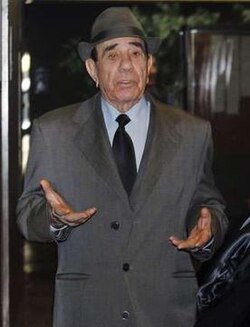
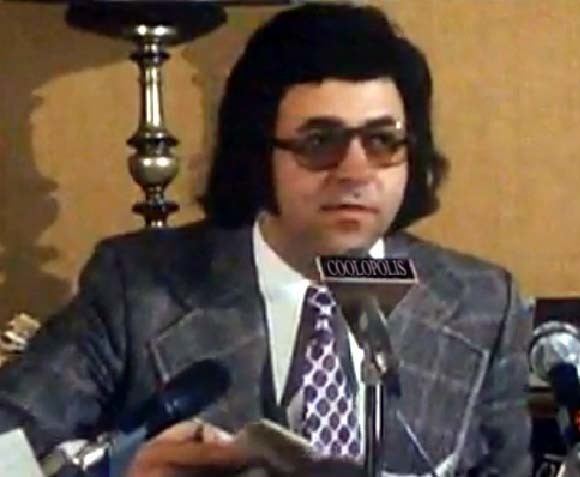
André “Dédé” Desjardins, a 69-year-old French-Canadian man, was killed on April 27, 2000, in Saint-Léonard, in Montreal, Quebec. Contemporary reporting identifies that date—not October 2, 2026—as the date of his death. Desjardins was a former construction-union leader who had once held senior positions within Quebec's labour movement, but by the years preceding his death police and journalists also associated him with organized-crime figures and high-interest money lending.
That morning, Desjardins had eaten breakfast at Shawn's, a restaurant on Metropolitan Boulevard. As he approached the vehicle he was using in the parking lot behind the restaurant, a gunman carried out what investigators quickly characterized as a carefully prepared professional assassination. Desjardins was struck repeatedly by gunfire and died at the scene. Published accounts later described him as having been shot approximately 11 times. Police recovered a firearm equipped with a silencer near the body, along with shell casings, and investigators began examining nearby surveillance footage and vehicles for evidence. No useful fingerprints were reportedly recovered from the vehicles examined around the scene.
The killing immediately attracted attention because of Desjardins's relationships within Montreal's organized-crime world. Only the day before his murder, he had breakfasted at the same restaurant with Maurice “Mom” Boucher, the powerful leader of the Hells Angels' Nomads chapter. Police considered that meeting important enough that homicide investigators later questioned Boucher. He declined to answer investigators' questions. Authorities said the killer appeared to have been exceptionally well informed about Desjardins's movements; Desjardins had been back in Montreal for only about five days and normally spent much of his time outside Canada. Investigators publicly described the attack as the work of a professional who had carefully prepared the ambush.
Later accounts of the events preceding the killing described a serious dispute involving a large debt. Boucher was reported to have asked Desjardins to forgive a roughly $400,000 loan carrying extremely high interest that had been extended to one of Boucher's associates. Desjardins refused. The two men were reportedly expected to meet again at Shawn's on the morning Desjardins was killed, but Boucher did not appear. These circumstances contributed to investigative interest in Boucher and the Hells Angels, but they did not result in Boucher being charged with Desjardins's murder.
Investigators eventually established an important connection to Charles Michel Vézina, a gunsmith authorities associated with the Hells Angels. Vézina was arrested in November 2000 after police investigating the attempted murder of crime reporter Michel Auger determined that weapons linked to the two attacks had significant similarities. Authorities alleged that Vézina had manufactured or supplied the weapons used both in the Desjardins killing and in the September 2000 shooting of Auger. In both cases, police identified modified Ruger. 22-calibre pistols equipped with silencers. Vézina was formally accused of weapons-related offenses connected to the firearm used against Desjardins, but he was not charged with personally shooting him.
During his 2001 trial, Vézina pleaded guilty to all 11 weapons charges against him. He admitted illegally manufacturing and selling firearms, including weapons that had been used in the attacks on Desjardins and Auger. He was sentenced to four years and eleven months in prison and was prohibited from possessing firearms for life. His conviction established who had supplied or manufactured the murder weapon, but it did not establish in court who pulled the trigger or who ordered Desjardins killed.
Investigators continued to believe the assassination was connected to Montreal's organized-crime conflicts. Police officials later said they believed the person who shot Desjardins was also connected to the attack on Auger, but authorities lacked evidence sufficient to lay a murder charge. Vézina's unwillingness at the time to provide testimony identifying the gunman was cited as one of the obstacles investigators faced. Although various organized-crime figures were scrutinized and theories centered heavily on the Hells Angels milieu, no person was successfully prosecuted for actually killing Desjardins.
The murder therefore remained unresolved at the level of the actual shooter and any person who may have ordered the assassination. Police succeeded in tracing the weapon supply chain far enough to obtain Vézina's weapons conviction, and Maurice Boucher was questioned because of his meeting with Desjardins shortly before the shooting, but neither Boucher nor another alleged organizer was convicted of Desjardins's murder. The circumstances surrounding the killing—his organized-crime relationships, the suppressed firearm, the carefully timed ambush and the killer's apparent knowledge of his movements—left investigators viewing the death as a deliberate contract-style execution rather than a spontaneous act of violence.