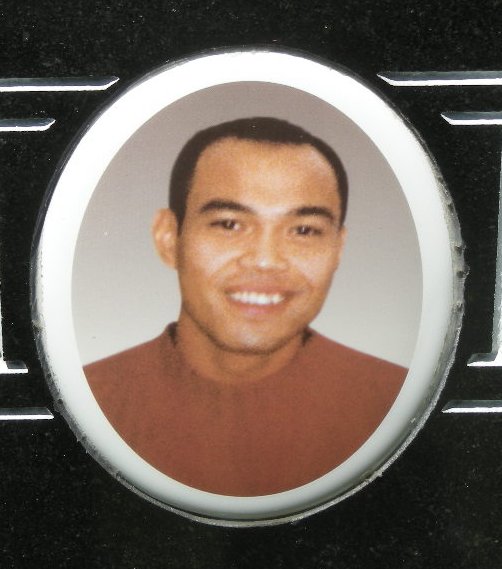
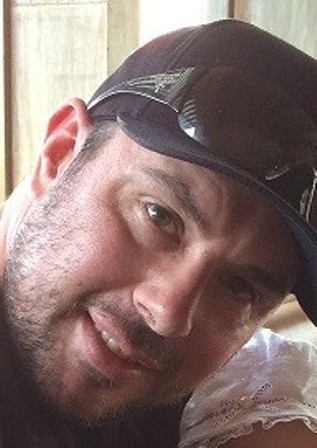
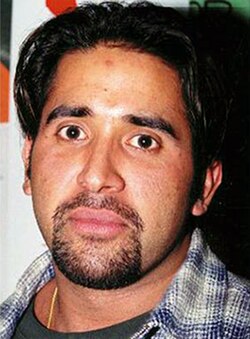
Bernd Göricke, a 27-year-old White/Caucasian man from West Germany, was traveling through Canada with his fiancée, Andrea Scherpf, in the fall of 1983. Although some records have circulated with differing dates and ages, the stronger case record identifies Göricke as 27 and places the killings in early October, most likely on or about October 3, rather than October 1.
The couple had been hitchhiking across Canada when they reached northeastern British Columbia and are believed to have accepted a ride near Chetwynd from the driver of an older Chevrolet pickup truck. Their journey ended along a remote stretch of country west of the community, where both were shot to death.
Their bodies were discovered on October 6 on a trail approximately 32 kilometres west of Chetwynd. Both had suffered fatal gunshot wounds, with accounts of the investigation indicating that they had been shot in the head. Their belongings were missing, leading investigators to conclude that whoever killed them had also taken property from the couple. The location was isolated, near the Highway 97 and Pine River area, and investigators were left trying to reconstruct where the pair had entered the killer's vehicle and what happened during the drive west of town.
The killer apparently did not simply disappear after leaving the bodies. Five travellers' cheques belonging to the victims were passed with forged signatures on October 4 and 5. The transactions traced a route south from the Chetwynd area, with the cheques reportedly used for fuel in communities including Prince George, Quesnel, McLeese Lake, Lac La Hache and 100 Mile House. The movement of those cheques suggested that someone possessing property stolen from Göricke and Scherpf had quickly traveled south through the British Columbia interior after the killings.
Another important piece of evidence surfaced the day after the bodies were found. On October 7, a pair of blue jeans was recovered from a garbage container roughly a kilometre in the direction of Chetwynd from the place where the victims had been discovered. The jeans were heavily bloodstained and showed evidence consistent with high-velocity blood spatter. Early forensic testing determined that blood on the clothing was consistent with the victims. Decades later, advances in DNA testing would make those jeans one of the most important pieces of evidence in determining who had not committed the murders.
For years the investigation produced no charge. Hundreds of tips were examined, but the major break that eventually led to an arrest did not come until 1989. Mary Madonna Kelly, who had known Andrew "Andy" Rose and had worked near Chetwynd with him during 1983, alleged that Rose had appeared at her trailer in the early morning hours of October 3 or 4 with blood on his clothing. She claimed he told her he had just killed two people by shooting them in the head. She later alleged that Rose had discussed taking the victims' possessions and where the bodies had been left.
RCMP investigators arranged for Kelly to telephone Rose while the conversation was secretly recorded. During the September 7, 1989 call, Rose did not confess. He questioned what Kelly was talking about, indicated that he did not remember the incident she described and denied killing anyone. Nonetheless, he was arrested that night and charged with the two murders. The prosecution's case ultimately depended overwhelmingly on Kelly's account; there was no physical evidence at the time specifically tying Rose to the shootings, and evidence established that he had not been the person who cashed the stolen travellers' cheques.
Rose was found guilty of two counts of second-degree murder on March 8, 1991 and sentenced to life imprisonment. In 1992, the British Columbia Court of Appeal overturned those convictions and ordered a new trial after finding problems with the instructions given to the jury. The appellate court also drew attention to inconsistencies in Kelly's account. One difficulty involved the bloodstained jeans: accepting her version meant Rose would have had to travel away from the body site while still wearing highly incriminating clothing and then return toward the area where the victims had been found in order to discard the jeans.
Rose faced a second trial, and on April 26, 1994 he was again convicted of two counts of second-degree murder and again received a life sentence. His challenge to that conviction initially failed, but forensic science was beginning to change the case. DNA testing subsequently produced evidence that did not match Rose's genetic profile. At roughly the same time, investigators received an entirely different lead concerning another man, Vance Hill.
Hill had been living in British Columbia at the time of the murders and had been arrested on unrelated charges later in October 1983, but he was never charged with killing Göricke and Scherpf. Years afterward, Hill's estranged wife said that he had confessed to her to killing a hitchhiking couple following an argument. Her account described a confrontation in which the male traveler was shot with a rifle before the woman was also killed. By the time police learned of the alleged confession, Hill could no longer be questioned: he had died by suicide in California in 1985. The RCMP reopened its investigation after receiving information about Hill in 1997.
With the new Hill evidence and DNA results undermining the case against Rose, Rose was released on bail on December 15, 1997 after years behind bars. His convictions were subsequently overturned and another trial was ordered. Police continued investigating Rose and later used an elaborate "Mr. Big" undercover operation in which officers posed as members of a criminal organization, befriended him, provided him with money and work, and attempted to persuade him that confessing to the murders was necessary to gain the group's help. Rose repeatedly maintained his innocence before eventually making incriminating statements under intense pressure. A later expert examination characterized the tactics as involving threats, inducements and psychological manipulation, and the resulting confession was never presented at a trial.
Ultimately, further DNA analysis proved decisive in the prosecution's decision not to try Rose again. His genetic profile did not match the relevant samples tested in connection with the murders. On January 22, 2001, the Crown stayed the proceedings against him, ending the prosecution after Rose had spent nearly eight years imprisoned for convictions that were ultimately overturned. The Canadian Registry of Wrongful Convictions now classifies his convictions as wrongful and the killings themselves as unsolved.
DNA evidence also failed to establish Vance Hill as the killer. Testing of material associated with the bloodstained jeans revealed DNA from multiple people, including the victims, but the significant unidentified profile did not match either Rose or Hill. As a result, neither of the two men who became the principal publicly identified suspects could be forensically tied to the critical evidence, and no replacement suspect was charged.
The investigation therefore returned essentially to where it had begun: an unidentified person had picked up Göricke and Scherpf while they were traveling through northern British Columbia, killed them, taken their possessions and traveled south while using stolen travellers' cheques. Police renewed appeals for information decades later, including asking the public about property that had disappeared with the couple. Despite the arrests, two murder convictions, two successful efforts to overturn those convictions, a third prosecution that never went forward, another suspect's alleged confession and years of forensic re-examination, Bernd Göricke's murder and the murder of Andrea Scherpf remain officially unsolved.