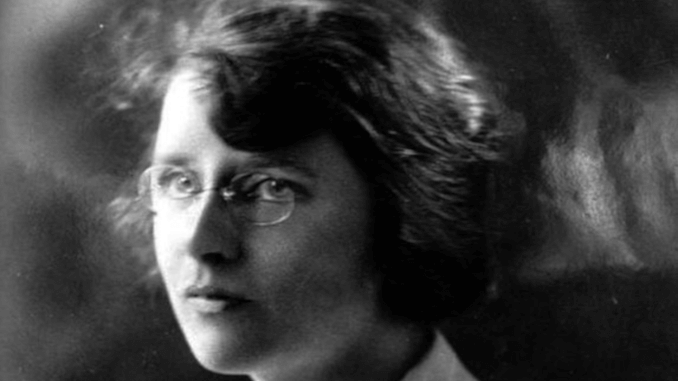
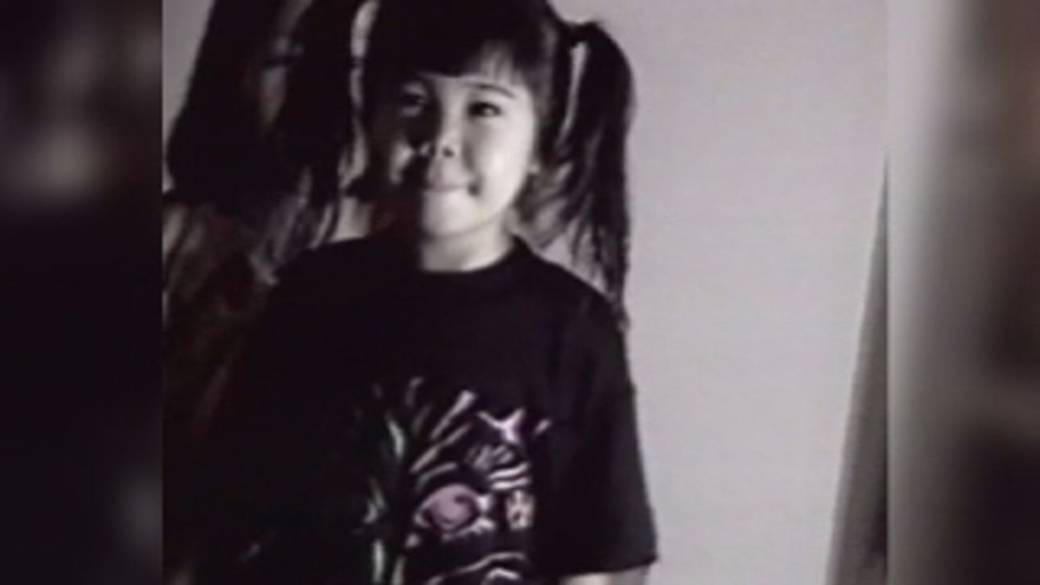
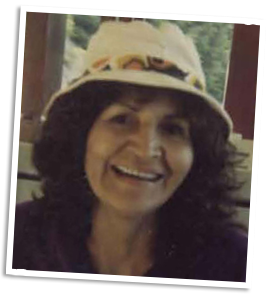
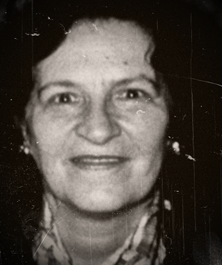
Andrea Scherpf was a 23-year-old White/Caucasian woman from West Germany who was travelling through Canada with her fiancé, Bernd Göricke, in the fall of 1983. The couple were hitchhiking through northern British Columbia as part of their trip, carrying backpacks, camping equipment, clothing, identification documents and other belongings. On or about October 3, they are believed to have accepted a ride from the driver of a 1960s Chevrolet pickup truck while travelling through the Chetwynd
area. They were never seen alive again.
Investigators determined that Scherpf and Göricke had been shot to death. Their bodies were discovered on October 6 along an isolated area roughly 32 kilometres from Chetwynd, near Highway 97 and the Pine River. Their belongings were missing, leading investigators to conclude that the killer had taken their property after the shootings. A pair of blood-spattered jeans believed to have been connected to the killer was recovered and later became one of the most important pieces of physical evidence in the case. The victims were not immediately identified; forensic dental work suggested they were European, and communication with Interpol eventually established their identities later that month.
The killer apparently continued south after the murders. Five of Scherpf's travelers' checks were used to purchase gasoline on October 4 and 5 at locations including Prince George, Quesnel, McLeese Lake, Lac La Hache and 100 Mile House. Police believed the person using the checks was travelling in the Chevrolet pickup associated with the case. Despite hundreds of tips and an extensive investigation, no immediate arrest was made, and much of the couple's property was never recovered.
The investigation changed dramatically in 1989 when Madonna Mary Kelly implicated Andy Rose, a man who had worked in the Chetwynd area in 1983. Kelly told investigators that Rose had appeared at her residence around the time of the killings covered in blood and had claimed that he had killed two people. Her account became the foundation of the case against him. Rose was charged with the double murder and convicted in 1991. After that conviction was overturned and a new trial ordered, he was tried again and convicted a second time in 1994. He continued to maintain that he had not murdered Scherpf and Göricke.
Scientific evidence eventually undermined the prosecution. DNA testing performed on the blood-stained jeans did not place Rose on the garment. His second conviction was subsequently overturned, and he was released on bail while the Crown prepared for another trial. During this period the RCMP also subjected Rose to an elaborate undercover "Mr. Big" investigation in an effort to obtain further evidence. When the case returned to court in 2001, testing showed biological material from several people on the jeans, including the victims and an unidentified third person, but that significant unidentified DNA did not match Rose. The prosecution did not secure another conviction, and Rose was acquitted after having spent close to a decade imprisoned in connection with the murders.
Another potential suspect emerged while Rose's conviction was being challenged. Vance Hill, an American construction worker who had been living in British Columbia, had been arrested by the RCMP on unrelated false-pretense charges later in October 1983. He subsequently returned to California. Years afterward, his former wife, Willadeen Hill, said that he had confessed to killing a travelling couple in British Columbia. According to her account, Hill said he had picked up the couple, began harassing Scherpf, and became involved in an argument after Göricke objected. She said Hill claimed he retrieved a rifle, shot Göricke and then killed Scherpf. Hill died in 1985, long before his former wife's account reached investigators in 1997.
The allegation against Hill initially offered investigators a striking alternative explanation for the crime, but forensic testing did not resolve the murders. The unidentified DNA profile recovered from the jeans did not match Hill either. With the physical evidence excluding both Rose and Hill as the source of the key unidentified DNA, neither man could be established as the killer through that evidence. Rose's convictions were undone, while Hill was never charged with the murders.
The RCMP renewed its appeal for information three decades after the killings, releasing details about the suspect's pickup and the property stolen from Scherpf and Göricke in hopes that someone might recognize an item or remember the person who possessed it. The belongings included passports, backpacks, camping gear, clothing, a camera and other personal effects. Despite the prosecutions, alternate suspect investigation and later DNA testing, no one has been convicted of killing Andrea Scherpf and Bernd Göricke, and the double homicide remains unsolved.