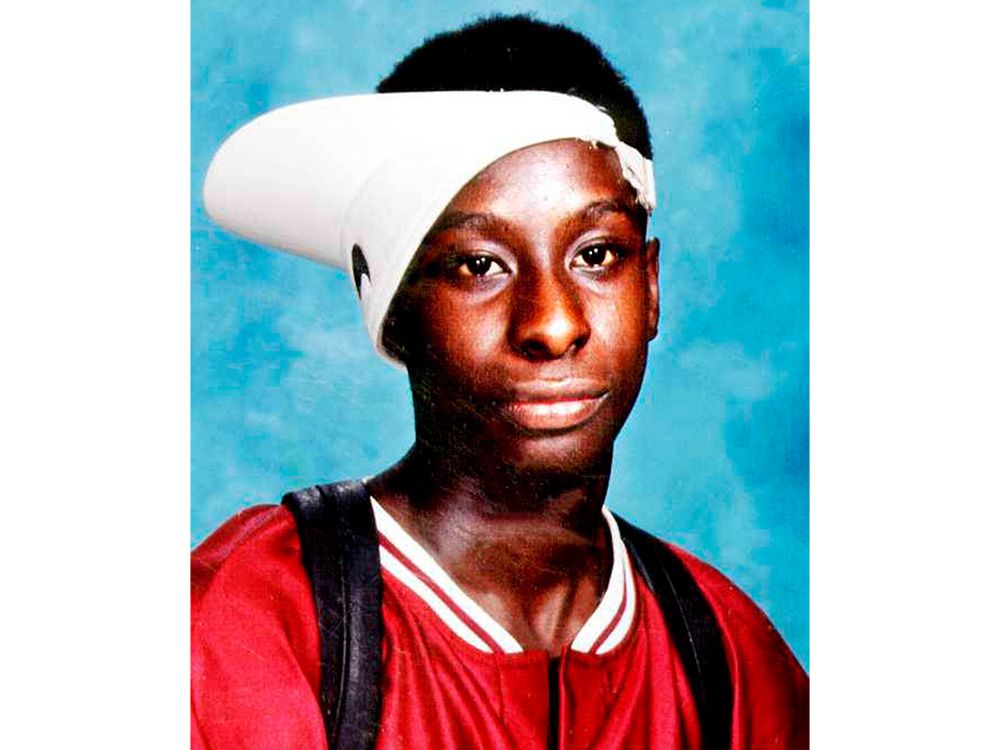
Ivan Lawrence Wheeler, a 27-year-old man, was working as a taxi driver in London, Ontario, when his life ended during the overnight hours of February 17 into February 18, 1977. Although September 30, 1977 has been associated with his case in some records, the London Police Service identifies February 18, 1977 as the date of his death. Wheeler was driving U-Need-A-Cab taxi No. 457, and at approximately 5:15 a.m.
that morning a London police officer patrolling near Cheapside Street and Highbury Avenue noticed the cab in the parking lot near the Highbury Racquets Club. Wheeler was found slumped over in the driver's seat.
At first, nothing about the scene made it immediately obvious that Wheeler had been murdered. There was little or no visible blood, and the hood of the parka he was wearing concealed the injury to the back of his head. A coroner who examined him at the scene initially believed that Wheeler may have suffered a heart attack, in part because of physical signs observed around his mouth. As a result, detectives were not immediately called to treat the area as a homicide scene. It was only during the autopsy that the truth became apparent: Wheeler had been shot in the back of the head with a small-calibre firearm. Police subsequently classified his death as a homicide. The murder weapon had not been located during the initial investigation.
Investigators reconstructed Wheeler's final known movements and determined that he had been in Thamesville, Ontario, visiting his girlfriend on the evening of February 17. He was last known to be alive at approximately 9:45 p.m. and was believed to have left Thamesville around 10:00 p.m. to return to London. Police considered the possibility that somewhere during the return trip, or shortly after he reached London, Wheeler picked up a passenger. When his taxi was found, the meter showed an unpaid fare of $6.05. Investigators calculated that the distance from the Highway 401 exit at Highbury Avenue to the area where the cab was found was consistent with the possibility that Wheeler had started the meter after leaving the highway.
The condition of the cab made robbery appear unlikely as the primary motive. Wheeler's money changer remained attached inside the taxi, money was still in his wallet, and his briefcase was on the front passenger seat. Nothing indicated that the killer had simply shot him in order to steal his earnings. Because the fatal shot entered the back of his head, investigators considered the possibility that the gunman had been sitting behind Wheeler inside the cab, potentially as a passenger. People leaving the racquets club around midnight later recalled seeing Wheeler's taxi parked there. His head appeared to be resting against the driver's seat, and witnesses apparently assumed that he was sleeping rather than realizing he had been killed.
The killing came during an already devastating period for Wheeler's family. He had moved from the Belgrave area to London the previous September to live with his brother-in-law after Wheeler's sister was killed in a traffic accident. His mother and brother-in-law told investigators that they were unaware of anyone who would have wanted him dead and did not believe he had known enemies. Police devoted three teams of detectives to the homicide and conducted an extensive series of interviews. Within days, investigators had spoken with approximately 200 people, but none of those interviews produced what police considered a credible lead capable of identifying the killer.
No arrest was made in the immediate investigation, and no publicly identified suspect has ever been charged with Wheeler's murder. Investigators considered several possibilities, including that he was killed by an unknown passenger he picked up while returning to London, by someone he knew, or by someone with whom he had previously experienced a confrontation. The evidence surrounding the running taxi meter and the apparent position of the shooter has continued to make an unidentified passenger an important theory, but no individual has been publicly established as the killer.
Decades later, the London Police Service continues to list Ivan Wheeler's death among its unsolved murders. There have been no publicly reported charges, trial, or conviction connected to his killing, and the identity of the person who entered his taxi, shot him from behind, and left him in the parking lot remains unknown. Police continue to seek information from anyone who may be able to explain what happened during Wheeler's final trip back to London on the night of February 17, 1977.