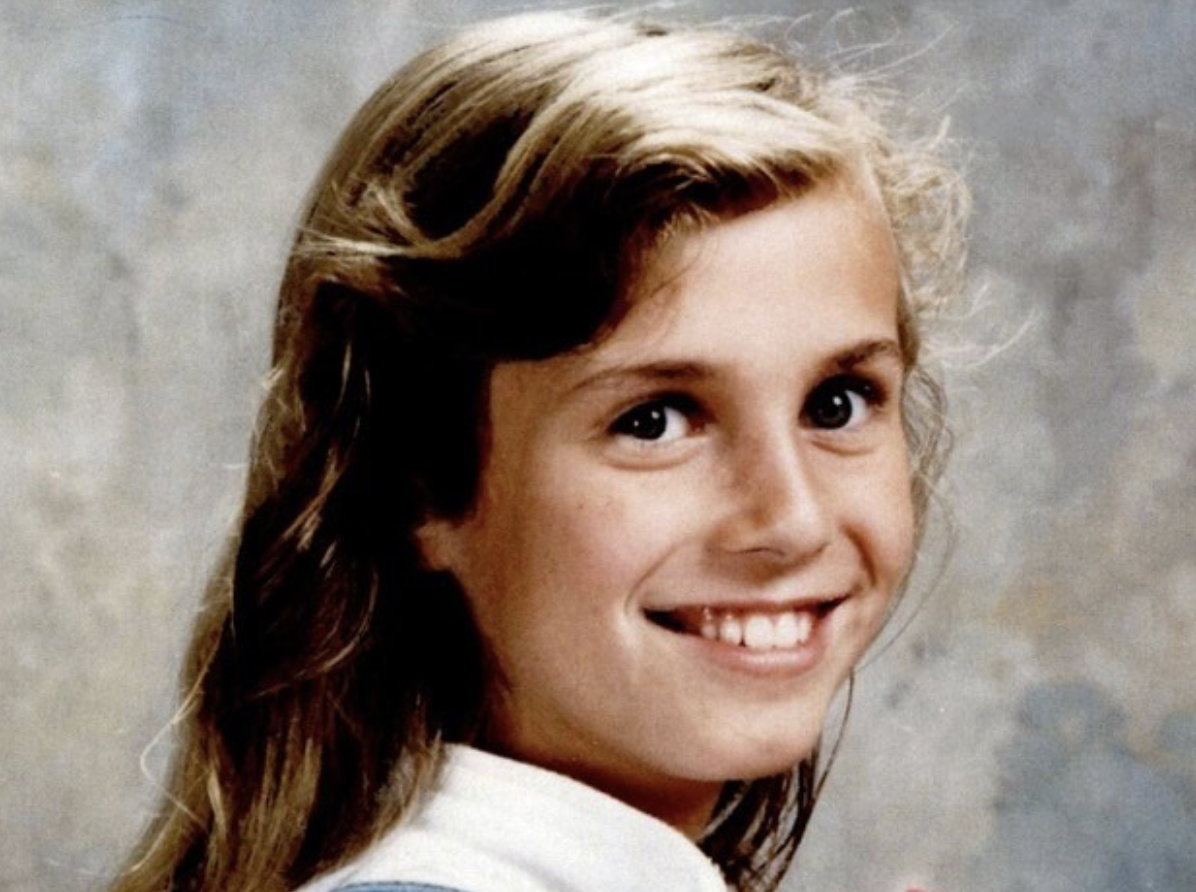
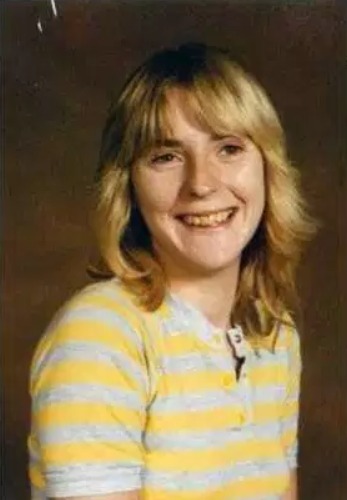
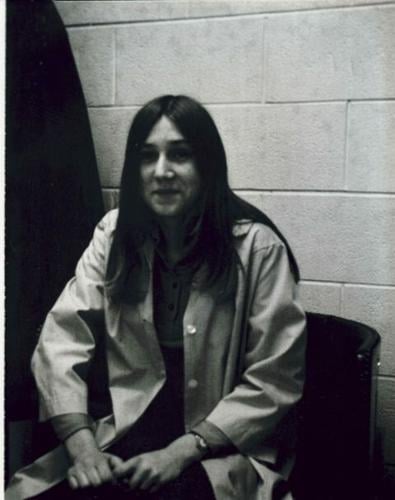
Lynne Harper was a 12-year-old girl living with her family at Royal Canadian Air Force Station Clinton in southwestern Ontario in June 1959. Her father was an RCAF flying officer, and Lynne attended Grade 7 at A.V.M. Hugh Campbell School on the air base. On the evening of June 9, she was seen with classmate Steven Truscott, who was giving her a ride on the crossbar of his bicycle along the County Road leading north from the base toward Highway 8.
What happened after they rode away together would become the central question in one of Canada's most controversial murder cases.
Truscott maintained that he took Lynne as far as the intersection of the County Road and Highway 8 and left her there unharmed. According to his account, he turned his bicycle back toward the base and, while looking toward the intersection, saw a vehicle stop and believed he saw Lynne entering it. Prosecutors developed a very different account, alleging that Truscott and Lynne never reached the highway intersection together. The Crown contended that they left the road near Lawson's Bush, a wooded area beside the County Road, where Lynne was sexually assaulted and killed.
When Lynne failed to return home, her father reported her missing at about 11:20 that night. An extensive search followed. At approximately 1:50 p.m. on June 11, members of a search party discovered her partially nude body in Lawson's Bush. Her blouse had been knotted around her neck and used to strangle her, and the medical evidence established that she had been sexually assaulted. Clothing and other items were found in the area around her body. Although the prosecution originally placed her death within a narrow period on the evening of June 9, the reliability of that estimated time of death later became one of the most important issues in the case.
Investigators quickly concentrated on Truscott, who had been the last known person seen accompanying Lynne. He was taken into custody on the evening of June 12 and formally accused of her murder at about 2:30 a.m. on June 13. Despite being only 14, he was ordered to stand trial as an adult for capital murder. After a preliminary inquiry in July, he was committed for trial, and his jury trial began in Goderich on September 16, 1959.
The Crown's case was circumstantial but was presented as a combination of several pieces of evidence. Prosecutors relied heavily on medical testimony that placed Lynne's death between approximately 7:00 and 7:45 p.m., a period when Truscott had been with her. Witness testimony concerning where the two had been seen along the County Road was used to challenge his claim that he had taken her all the way to Highway 8. The prosecution also presented testimony that Truscott had allegedly asked a friend to give police a false account of his whereabouts, portraying that as evidence of consciousness of guilt. Medical witnesses additionally testified about injuries observed on Truscott shortly after the killing and suggested they could have resulted from the sexual assault. Truscott consistently denied killing Lynne.
On September 30, 1959, the jury found Truscott guilty and recommended mercy. Under the law then in effect, the trial judge nevertheless was required to sentence him to death by hanging. His Ontario Court of Appeal challenge was unsuccessful in January 1960, but the federal government immediately commuted the death sentence to life imprisonment. The Supreme Court of Canada subsequently denied him leave to appeal. Public concern over the conviction continued, however, and in 1966 the federal government took the unusual step of referring the case to the Supreme Court of Canada for another examination. After hearing additional evidence, including testimony from Truscott himself, the Supreme Court ruled on May 4, 1967, with one judge dissenting, that the conviction would have been upheld. Truscott was eventually paroled in October 1969 after serving more than ten years in custody.
Decades later, extensive examination of police, Crown, military and forensic archives uncovered evidence that had not been before the original jury. Justice Fred Kaufman conducted a lengthy review for the federal Minister of Justice and found that significant undisclosed material could have been used to challenge prosecution witnesses, weaken the Crown's reconstruction of the evening and open additional investigative avenues. The review also raised serious questions about the narrow time-of-death estimate that had been crucial to placing Lynne's killing during the period when she was known to have been with Truscott. Kaufman concluded that the evidence provided a reasonable basis for believing a miscarriage of justice had likely occurred, although he did not conclude that the evidence itself proved Truscott factually innocent. In 2004, the federal justice minister referred the conviction to the Ontario Court of Appeal.
A five-judge panel eventually reconsidered the case using the fresh evidence. Modern expert testimony showed that the original pathological evidence could not reliably restrict Lynne's death to the narrow 45-minute period that had been so damaging to Truscott at trial. The appellate court also considered previously unavailable evidence affecting witness testimony and other aspects of the prosecution case. On August 28, 2007, the Ontario Court of Appeal ruled that Truscott's conviction had been a miscarriage of justice and quashed it. Because so many decades had passed and a retrial was no longer realistically possible, the court entered an acquittal. The judges concluded that, if a new trial could have been held using the entire evidentiary record, an acquittal would clearly have been the more likely result. The court nevertheless declined to issue a separate declaration that Truscott had been proven factually innocent.
The acquittal left the central question surrounding Lynne Harper's death unanswered. Later reviews and writers examined other possible suspects and criticized how quickly the original investigation had centered on Truscott, but no alternative perpetrator was convicted of Lynne's killing. The 2007 ruling cleared the only person ever convicted in the case without identifying who actually assaulted and strangled Lynne, leaving her murder unresolved more than six decades after she disappeared near the Clinton air base.