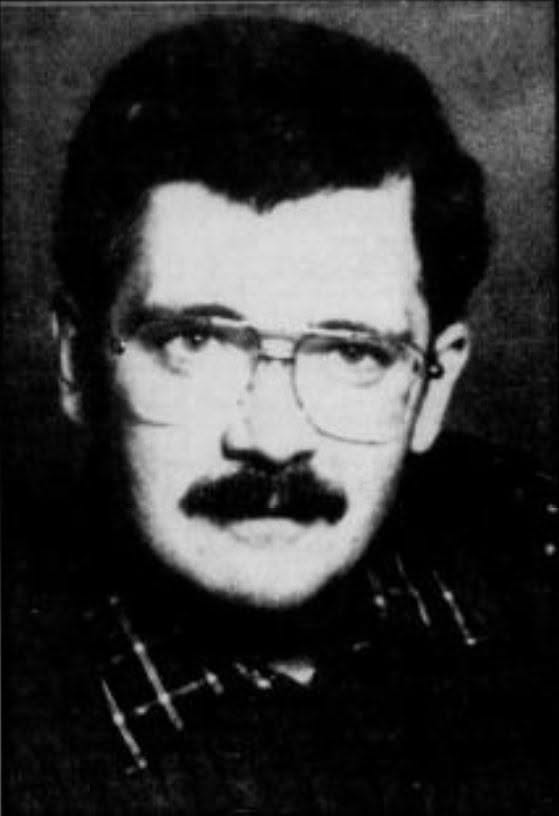
Agapit LeBlanc was a 39-year-old White/Caucasian man from Bouctouche, New Brunswick, who worked as a fisheries officer with the Canadian Fisheries and Marine Service. Historical and Canadian government records place his death on October 20, 1926, rather than October 1, 2026. He had joined the fisheries service in 1920 and was carrying out enforcement work along the New Brunswick coast at a time when officers frequently confronted people engaged in illegal fishing.
On the night he disappeared, LeBlanc was investigating illegal fishing activity, described in historical accounts as illegal smelt fishing in the Bouctouche area.
LeBlanc went out alone despite having reason to believe his work had placed him in danger. Family accounts said he had received anonymous threats in the weeks before his disappearance. One particularly ominous warning included an image of a coffin and a message telling him, in substance, that the coffin would be his if he did not stop pursuing people on the sea. Nevertheless, he continued his enforcement duties. When he failed to return from his investigation on October 20, concern quickly grew over what had happened to him. He left behind his wife, Anna, and three young children.
The search ended four days later when LeBlanc's body was discovered in the waters around Bouctouche Bay. Accounts describe the body as having been deliberately weighted down in approximately eight feet of water, an apparent effort to conceal it beneath the surface. He had been beaten and shot. Contemporary medical testimony reported that numerous small shotgun-like pellets had struck his face, apparently from some distance, and that he had also suffered blows to his body. A later Fisheries Department account described his skull as fractured. Medical evidence reported in contemporary coverage indicated that the physical blows themselves were not considered immediately fatal and that shock ultimately caused his death.
The setting complicated the investigation. Bouctouche Bay was not only an area where fisheries officers pursued poachers, but was also associated with liquor smuggling during the Prohibition era. Later historical examinations have raised both possibilities: LeBlanc may have encountered people engaged in illegal fishing, or he may have crossed paths with alcohol smugglers operating along the coast. Neither theory was proved. Accounts of the investigation indicate that authorities did have suspects and that some may have been people living in or near the community, but investigators encountered a strong reluctance among local fishermen and residents to speak to outsiders. No publicly available reliable account identifies a named suspect against whom a prosecutable case was established.
The investigation remained active well after the killing. In March 1928, The Daily Gleaner published a report under the headline “Expect Arrests In Kent Co. Murder,” indicating that authorities were still pursuing the case and believed arrests might be forthcoming nearly a year and a half after LeBlanc's death. Whatever evidence or suspicions prompted that development did not ultimately produce a publicly documented prosecution. No one was convicted of killing LeBlanc, and Canadian government records continue to describe the murder as unsolved.
LeBlanc's death became historically significant within Canadian fisheries enforcement. He is remembered as the first Canadian fisheries officer murdered in the line of duty, and his killing remained unresolved for generations despite the early suspects, threats preceding his death, and later investigative activity. The Canadian Coast Guard eventually honored him by naming the CCGS A. LeBlanc after him, preserving the memory of an officer who disappeared while carrying out an enforcement investigation and whose killers were never brought to trial.