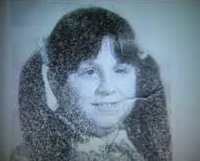
Was this 11 year old girl the victim of a serial killer?
Michelle Maenza was an 11-year-old girl who vanished on November 26, 1973, in Rochester, New York, after what should have been a quick errand on the walk home from school. She had been seen leaving in the afternoon and heading toward a nearby shopping plaza, planning to retrieve a purse her mother had left behind. Not long after, witnesses recalled a beige or tan car moving fast through the area, with a crying child in the passenger seat, a fleeting image that would harden into dread as the hours passed and she did not come home.
As night fell, another moment surfaced in the timeline: along Route 350 in Walworth, a motorist noticed a large beige or tan vehicle stopped with a flat tire and a man holding a girl by the wrist. When the motorist slowed to offer help, the man shifted to hide the girl behind him and angled himself to block the license plate from view. The driver’s stare was described as so menacing the motorist left, later realizing the encounter may have been the closest, most ordinary chance for rescue.
Two days later, on November 28, her body was found face down in a ditch along a rural road in Macedon, a grim distance from where she had last been expected to walk. Investigators concluded she had been sexually assaulted and killed by strangulation with a ligature, and she also bore signs of blunt-force trauma. The scene and the forensic traces suggested a brief, brutal captivity: strands described as white cat fur clung to her clothing, vegetation from the dump site was found in her grasp, and investigators reported recovering biological evidence and a partial palm print that hinted at the attacker’s touch without naming him.
Her killing fit a pattern that had already haunted the Rochester region: the murders later called the Alphabet or Double Initial killings, in which girls with matching first-and-last-name initials were abducted, sexually assaulted, and left in outlying towns that echoed those initials—Maenza in Macedon among them. The eerie symmetry sharpened public fear and drove waves of tips, hotlines, and composite sketches, but the case did not resolve into a single identifiable man.
No arrest has been publicly tied to her murder, and no suspect has been convicted for it. Over the years, investigators questioned large numbers of people and chased leads that flared and died; later discussions of possible offenders have included attention on individuals connected to other violent crimes, but those threads have not produced charges in this case, and at least one widely discussed comparison involving a later-known serial offender has been reported as not matching available DNA from the broader set of related murders. The investigation remains open, revisited as new techniques and renewed collaboration among agencies offer the hope that what was once unknowable might still be named.