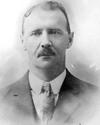
Avery Stone was 26 when he was killed on October 18, 2007, in Buffalo, New York, a young African American/Black man whose name is now carried forward mostly through a stark, unfinished public record. The location associated with the case points to Dewey Avenue, a place that, for the people who loved him, can’t simply be another street on a map. It’s a marker in time—an address tied to a night that split life into before and after.
There is a particular cruelty in how little the outside world sometimes learns after a life is taken. In this case, the public information that remains does not describe what happened to Avery in his final moments. It does not explain how the violence unfolded, what words were said, who was with him, or whether he had any chance to run, to call for help, to make it home. The record identifies the crime as murder, but offers none of the story that usually follows such a word—no public description of the cause of death, no account of the circumstances, no narrative that helps strangers understand what was lost.
What it does show is the long shadow that followed. The case falls under the Buffalo Police Department in Erie County, yet time has moved on without the clean finality of an arrest or a courtroom answer. No suspect is publicly named. No suspect information is publicly listed. No arrests are recorded in connection with his death. No charges appear in the public listing. Instead, the case remains open and unsolved, suspended in that hard space where grief meets uncertainty and families are left to carry questions that never quite stop arriving.
An unsolved homicide doesn’t just leave one person missing; it changes the shape of everyone around them. It turns memories into fragile keepsakes and everyday places into reminders. It forces people who cared about Avery to live with a kind of silence that isn’t peaceful—silence filled with imagined possibilities and unasked questions, silence that returns at unexpected times. It’s the empty seat at gatherings, the moment someone thinks they see him in a crowd, the instinct to pick up the phone before remembering there will be no answer.
And still, the door remains open for truth. The public record includes a direct request for anyone with information to come forward and contact the Buffalo Police Department at 851-4415. That number represents more than procedure; it represents the hope that somewhere, someone knows something—something overheard, something witnessed, something remembered after years of trying to forget. Sometimes it’s a detail that seemed small at the time. Sometimes it’s a conscience that grows heavier with each passing year. Sometimes it’s a person finally ready to speak.
Avery Stone’s story, as it stands publicly, is incomplete. But incomplete does not mean insignificant. His name remains attached to a date, a city, and a street, and to the enduring fact that a life was taken and answers have not yet followed. The passage of time does not erase what happened. It only makes the need for clarity sharper—for the sake of justice, for the sake of accountability, and for the sake of everyone who loved him and has had to keep going without the truth they deserve.