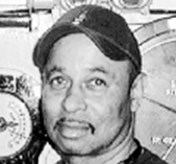
Clarence A. Jackson was 32 when his life ended in Buffalo, New York. He was a Black man, and the few details available here are painfully spare—just a name, an age, a place, and the fact of a death that left a space where a person used to be.
In that sparseness, the mind tries to fill in what it can’t bear to leave unfinished. A city street that keeps moving even after something irreversible happens. A familiar neighborhood that wakes up to the same routines, while somewhere a family’s world has split into “before” and “after.” A phone that rings, or doesn’t. The waiting that follows, heavy and relentless, when words like “gone” and “never again” refuse to make sense.
Clarence’s death is more than a line of information. It is the sudden absence of his voice in rooms where it once belonged, the empty seat at gatherings, the unfinished plans that no longer have a chance to become memories. It is the way grief settles into ordinary things—into morning light through a window, into the quiet moments between conversations, into the instinct to reach out and then remember there is no answer coming back.
With only what has been provided, there are no names to point to, no clear account of what happened, no public thread of arrests, suspects, or charges to follow to an ending that feels like justice. That silence can be its own kind of wound, because it denies the comfort of a clear story. It leaves loved ones carrying questions that have nowhere to land, and it leaves a community holding sorrow without the structure of explanation.
Still, Clarence’s name matters. Saying it is a refusal to let him become only a statistic or a fleeting mention. Even without the missing pieces—without the date, without the details, without the answers—what remains is that he was here, he was someone’s person, and his death is a loss that ripples outward far beyond what a few lines can capture.
And in the face of so little information, what can be honored is the humanity behind it: the truth that a life ended too soon is not a small thing, no matter how little is written down. Clarence A. Jackson’s story deserves fullness, dignity, and remembrance—the kind that holds him as a person, not as an event.