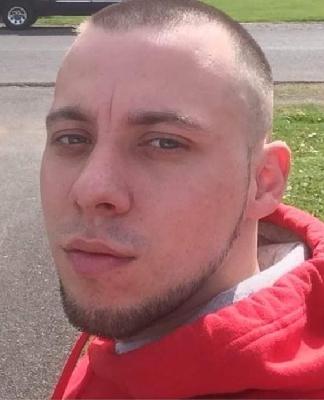
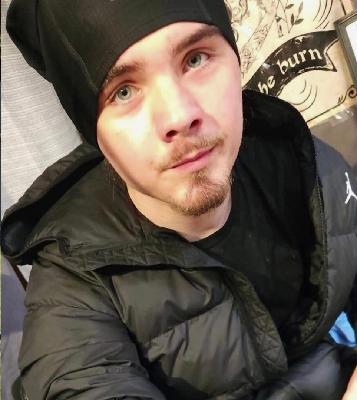
Deven J. Borgen was a 17-year-old boy from Rainier, Washington, remembered by those around him as kind, loyal, and deeply protective of the people he loved. Raised from early childhood by his grandparents, Kathy and Ken Borgen, in what family and friends described as the “small, safe town” of Rainier, he spent years being homeschooled before thriving as a student at Rainier High School.
Loved ones later wrote that his grandparents were more than caregivers; they were his parents, protectors, and biggest supporters, whose steady guidance helped shape him into a respectful, thoughtful young man whose good heart “touched every person who crossed his path.”
In the early morning hours of Friday, November 14, 2025, Deven was walking with his younger brother, 16-year-old Alexander, along College Street Southeast in Lacey, just south of Mountain View Elementary School. Around 1:50 a.m., multiple 911 calls reported gunfire near the marked crosswalk at College Street SE and 24th Avenue SE. Officers who rushed to the intersection found the brothers lying in the crosswalk with gunshot wounds. Medics and police tried to save them there in the street, but both boys were pronounced dead at the scene. Investigators quickly concluded that the attack was a drive-by shooting, with gunfire coming from a passing vehicle that sped away into the darkness.
News of the double killing rippled through Lacey and Rainier almost immediately. At the corner where the boys were found, balloons, flowers, candles, and handwritten messages began to appear, slowly transforming the crosswalk into a makeshift shrine. Friends and community members described the brothers as inseparable and full of life, recalling them as “vibrant presences” whose absence made the street feel hauntingly empty. At a candlelight vigil days later, people who had watched them grow up spoke through tears about their promise and the senselessness of two teenagers dying where they should have been safest—walking together in their own community.
For Deven’s family, the grief was layered and crushing: they had not only lost one child but two. At gatherings and in court, Deven’s mother, Christina Borgen, remembered how both boys had been turning their lives toward a bright future—how Deven had all A’s in school and went to church, and how Alexander had recently straightened out his path and was also earning top grades. Their grandfather, Kenneth Borgen, described Deven simply as “a good kid, helpful kid, would help anybody,” a young man whose instinct was always to step forward for others. Meanwhile, friends recalled him as the older brother who looked out for Alexander, someone quiet but strong, who tried to protect the people he cared about.
In the first days after the shooting, police publicly appealed for help, asking anyone with surveillance cameras along College Street south of 24th Avenue SE between 1 and 2 a.m. to review their footage, and urging witnesses to come forward. A national nonprofit, the Youth Peace & Justice Foundation, announced a reward of up to $5,000 for information leading to an arrest and conviction, framing the brothers’ deaths as an attack on students and committing to plant trees in their memory at a youth gun-violence memorial. The organization also launched a fundraising effort to support the Borgen family, promising to help give Deven and Alexander the kind of lasting tribute their short lives deserved. At the same time, friends and neighbors organized online fundraisers to ease the financial burden on Deven’s grandparents, who had devoted themselves to raising him, and on Alexander and Deven’s mother, as the family tried to navigate funeral arrangements and unimaginable loss.
As rumors swirled in the community about why the boys had been targeted, detectives worked quietly behind the scenes, piecing together a trail from shell casings and camera footage. According to court records later summarized by local media, surveillance video allowed investigators to trace a suspect vehicle from the scene back to a nearby residence known to be associated with a 20-year-old Lacey man named Trequanne Trenelle Wilson-Mason. Cell-phone records were said to place him in the area at the time of the shooting, and a witness told police that Wilson-Mason admitted to being the shooter. That combination of digital evidence and statements gave detectives enough probable cause to track him across the state. With the help of other agencies, they found him at a hotel in Wenatchee, Washington, where he was taken into custody in connection with the brothers’ killings.
What emerged from those court documents was a chilling picture of a fatal mistake. Investigators reported that Wilson-Mason told them he had intended to shoot Alexander because he believed—incorrectly—that Alexander was someone who had previously “shot up” his house in October 2024. After learning who the brothers actually were, he reportedly became emotional, realizing that he had “shot the wrong people.” The narrative in the charging documents shifted the story from early speculation about gang conflicts to something even more senseless: two honor-roll brothers, walking together in a crosswalk, killed because of a mistaken act of retaliation tied to an earlier, separate feud.
Not long after Wilson-Mason’s arrest, police announced that a second 20-year-old man had also been taken into custody in connection with the drive-by. According to Lacey police, this second suspect was arrested following a brief high-speed pursuit in Pierce County, during which officers used a pursuit-intervention technique that ended in a single-car rollover crash. The man was taken to a hospital for treatment and, once medically cleared, was to be booked into the Thurston County Jail on probable cause for two counts of first-degree murder and two counts of drive-by shooting. Both he and Wilson-Mason are being held without bail while the case moves through the courts, with Wilson-Mason also jailed on a no-bail warrant stemming from a previous felony domestic-violence case earlier in 2025.
Even with the arrests, the legal process will take time, and Deven’s family continues to live with the empty space his absence has left behind. Community members in Rainier and Lacey still gather at the crosswalk and at school memorials, light virtual candles in his name, and share stories of how he made people feel seen and valued. Online, tributes describe a teenager who loved his family, appreciated the quiet safety of his small town, and had his life cut short not by his own choices, but by someone else’s anger and misidentification. In the end, the story of Deven J. Borgen is not just about the violence that took him, but about a community’s determination to remember him as he lived—gentle, loyal, and full of promise—and to seek full justice for the night that took him and his brother away.