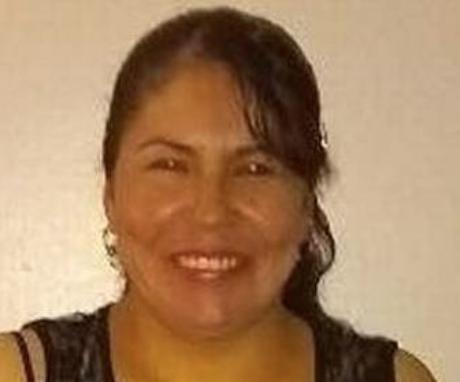
Annie Ruvalcaba-Barrera, a 39-year-old woman from Prosser, Washington, left her home community reeling when she was killed on November 15, 2025, in a violent domestic incident that unfolded on a rural road north of town. That Saturday evening, dispatchers began receiving reports of a crash, shouting, and then gunfire at the intersection of North Rothrock Road and West Evans Road in west Benton County.
When deputies and medics arrived, they found two vehicles that had collided and a chaotic scene that rapidly turned tragic. One of the adults was pronounced dead at the intersection; the other, gravely wounded, received CPR at the roadside and was airlifted for emergency care but could not be saved. Authorities later confirmed that the two people who died were Annie and her husband, 40-year-old Jose Luis Barrera Carrazco.
Investigators with the Benton County Sheriff's Office quickly made clear that what happened at that crossroads was not a random encounter but an eruption of domestic violence between two people who knew each other intimately. At a subsequent news conference, they said the couple had each been driving their own vehicle, and that one car had deliberately rammed the other before the shots were fired, though they have not publicly specified which driver initiated the crash. The sheriff's office Major Crimes Unit opened what they described as a possible murder-suicide investigation, and autopsies were scheduled to help piece together the exact sequence of events. In public statements, officials emphasized that the case appeared to be a “tragic, isolated situation between two people,” signaling that they did not believe anyone else was involved.
In the middle of that terrifying confrontation was a six-year-old child who had been riding in Annie's car. Deputies later confirmed that the child survived physically unharmed, even as the crash, gunfire, and sudden loss of two parents shattered the world they knew. The scene on North Rothrock and West Evans was the end point of tensions that, according to family and friends, had built behind closed doors. A fundraiser organized by Annie's sister-in-law described her death as the result of a “senseless act of domestic violence with her husband,” and noted bluntly that “they are both gone,” leaving their children to navigate an almost unimaginable grief.
Away from the flashing patrol lights and taped-off roadway, the portrait that emerged of Annie in the days after her death was of someone deeply rooted in her family and in Prosser itself. She had worked at Prosser Memorial Hospital for years, beginning in environmental services, cleaning and supporting others from behind the scenes. Over time, she studied, trained, and eventually rose to become a certified medical assistant in cardiology. Colleagues remembered her “infectious smile,” the way she could make patients feel seen and at ease, and how she carried the weight of demanding shifts with a light touch that made work feel less heavy for those around her. Local tributes described her as the life of the party, silly and warm, but also relentlessly hardworking and determined to provide for the children who depended on her.
Those children—five in all, along with a granddaughter—are now at the center of the community's response. Online memorials and local coverage describe how they have been thrust into adult responsibilities overnight, grieving their loss while trying to hold one another together. Friends, extended family, and coworkers have organized fundraisers to help them pay for funerals and basic living expenses, asking for prayers, financial support, and simple gestures of remembrance. The message repeated in those appeals is that Annie poured everything she had into her family and her work, and that the least the community can do now is step forward for those she left behind.
Law enforcement, meanwhile, continues to focus on reconstructing exactly what happened in the final minutes of Annie's life. The Benton County Sheriff's Office has not announced any arrests, nor have they indicated that they are searching for any additional suspects. Instead, detectives are treating the case as an apparent domestic-violence murder-suicide between Annie and her husband, with the investigation centered on forensics, autopsy findings, and witness information to determine who initiated the crash, who pulled the trigger, and how long-standing conflict within the relationship escalated into lethal violence. Public statements from the sheriff's office and subsequent reporting consistently stress that there is no broader threat to the public stemming from the incident, underscoring that the violence was confined to the two adults who died at the scene and in its immediate aftermath.
In Prosser, Annie's name now appears on national gun-violence memorial pages alongside thousands of others, a stark reminder of how quickly domestic situations can spiral into fatal encounters. Yet local remembrances linger less on the manner of her death than on the life she built: the long hours at the hospital, the jokes and hugs shared at family gatherings, and the way she seemed to light up a room simply by walking into it. For her children, coworkers, and neighbors, the crossroads where she died is just one point on the map; the memory they hold onto is of a woman who worked her way up, loved fiercely, and left a mark that will endure long after the sirens faded and the road reopened to ordinary traffic.