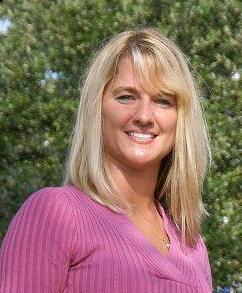
In the quiet community of Fox Island, Washington, the life of a 27-year-old Caucasian woman named Sophie Tinney came to a tragic end on April 20, 2025. What initially was reported as a suicide soon unraveled into a complex and disturbing homicide investigation, revealing a dark narrative of alleged pacts and connections to another violent act hundreds of miles away.
Early that Sunday morning, a 911 call was made by Lars Eugene Nelson, 29, Tinney's boyfriend, who claimed she had taken her
own life at his father's home on Fox Drive. However, upon their arrival, Pierce County sheriff's deputies grew suspicious of the circumstances surrounding her death. The Pierce County Medical Examiner's Office later confirmed these suspicions, ruling Tinney's death a homicide caused by multiple gunshot wounds to the head, a finding inconsistent with a self-inflicted act. This led to the arrest of Nelson, who was subsequently charged with second-degree murder.
During Nelson's arraignment, a fuller and more unsettling picture began to emerge. Prosecutors alleged that the shooting may have been planned and that Tinney, who had a history of mental health struggles, might have convinced Nelson to shoot her while she was sleeping. This theory was supported by conversations Tinney had with her parents, where she reportedly mentioned that Nelson would help end her suffering. Her parents described the relationship between Tinney and Nelson as "co-dependent" and suggested the possibility of a "suicide pact." Nelson pleaded not guilty, and his bail was set at $750,000, which he later posted, allowing for his release from custody.
The case took another bizarre turn when it was discovered that Tinney's death was mentioned in an online manifesto connected to a bombing at a fertility clinic in Palm Springs, California, on May 17, 2025. The bomber, 25-year-old Guy Edward Bartkus, who died in the explosion, described Tinney as his close friend in his writings. Bartkus's manifesto indicated a shared ideology with Tinney and suggested they had an agreement that if one of them died, the other would soon follow. His writings, which espoused "anti-natalist" and "pro-mortalist" views, suggested that Tinney's death was a catalyst for his act of domestic terrorism.