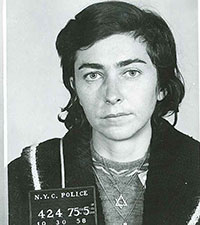
A woman is discovered dead under a tree In the spring of 1960, the serene desert landscape on the outskirts of Reno, Nevada, became the final resting place for a young woman, marking the beginning of a mystery that would endure for decades. On April 3rd, the body of 30-year-old Zona Rachel Stroud, a Caucasian female, was discovered in a desolate area off the highway that connects Reno to the historic mining town of Virginia City.
She was found beneath a tree, a solitary figure in the vast expanse.
Stroud was fully clothed when she was found, dressed in black slacks and a pink sweater. An examination would later reveal the cause of her death to be strangulation, a violent end to a life that remains largely shrouded in secrecy. Investigators arriving at the scene found few clues to piece together the events that led to her demise. The isolation of the location offered no immediate witnesses, and the trail for her killer had seemingly gone cold before it ever truly began.
The task of identifying the victim was the first hurdle for law enforcement. Her identity was not immediately known, but through fingerprint analysis, they were able to connect her to a prior arrest record. This breakthrough not only gave her a name but also revealed that she had been known by other names, including Sona Scott and Zona Boehmer. Despite this, details about her life and what had brought her to the Reno area were scarce.
The investigation into Zona Stroud's murder became a frustrating endeavor for the Washoe County Sheriff's Office. With limited evidence and a lack of substantive leads, the case quickly became a puzzle with too many missing pieces. No arrests were ever made, and no suspects were publicly identified. Over the years, the case of Zona Stroud has become a somber footnote in the region's history, officially recognized as the oldest unsolved homicide in Washoe County. The story of her death is one of unanswered questions, a silent testament to a life cut short and a killer who was never brought to justice.