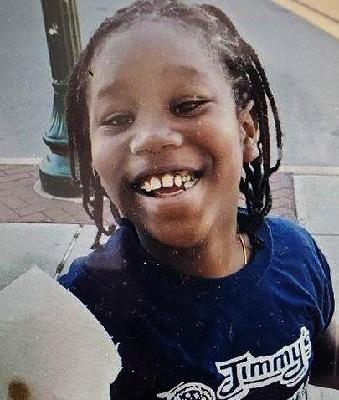
Brandi Mells, a 22-year-old Black woman, had built a life in Troy, New York, alongside her partner, Shanta Myers, in a basement apartment in the Lansingburgh section of the city. In the days before Christmas in 2017, something violent and deliberate unfolded behind that door—an attack that investigators would later place on or around December 21, 2017, even though the world outside kept moving as if nothing had changed.
On December 26, 2017, a property manager arrived to check on the household after concerns about their welfare and made a discovery that would leave the community shaken: Mells and Myers were dead inside the basement apartment along with Myers’ two children, Jeremiah and Shanise. Officials released few details at first, but authorities indicated the victims appeared to have been targeted rather than randomly attacked. As more reporting emerged, accounts described the victims as having been bound, with the killings carried out in a way investigators and officials struggled to put into words.
In the earliest public days of the investigation, police spoke of a scene so brutal it haunted the officers who entered it, while family and friends tried to make sense of the sudden silence from people they loved. As tips were sought and the neighborhood absorbed the shock, authorities emphasized that the case did not look like a random intrusion, and reporting indicated at least one of the eventual suspects was acquainted with one of the victims—suggesting the violence may have followed a line of access, familiarity, or opportunity rather than chance.
Before the year ended, investigators identified two suspects. James W. White and Justin C. Mann, both from Schenectady, were arrested and charged in connection with the four deaths. Early court proceedings brought formal accusations but few satisfying explanations—motive questions lingered publicly even as prosecutors and police moved forward with what they believed they could prove.
Over time, the case shifted from a search for answers to a fight over accountability. Mann ultimately pleaded guilty to second-degree murder for his role in the killings and received a sentence of 25 years to life. White went to trial and was convicted in December 2021 on multiple counts, including first-degree murder, with prosecutors describing evidence that traced him to and from Troy and tied him to stolen belongings from the victims. In January 2022, he was sentenced to life in prison without the possibility of parole—an outcome that closed the courtroom chapter, even as the loss left behind in Troy remained permanent.