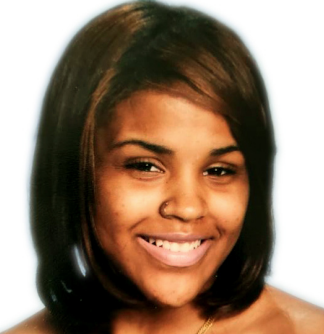
Emile Dennis was a 42-year-old Black woman living in Washington, D.C., moving through the tight, weathered blocks around Princeton Place NW in the summer of 1997, a neighborhood where longtime residents, open-air drug dealing, and creeping fear shared the same sidewalks. Her world was the Petworth/Park View area, a community in transition that had once been known for its stability and middle-class families but by the late 1990s was struggling with crack houses, street-level sex work, and the sense that the city’s attention fell elsewhere. Police would later group her with several other local victims, saying they were known to use drugs and were familiar faces among the same cluster of dealers and hangers-on who worked the corners near Georgia Avenue and Princeton Place.
By the time Emile disappeared, the neighborhood had already been unsettled by death. That May, another body had been discovered in an abandoned building on Princeton Street, just next door to the home of a man named Darryl Donnell Turner. A few months later, on August 9, 1997, the quiet of Princeton Place was broken again when Emile’s body was found hidden in a crawl space beneath Turner’s apartment. Some official records even misspelled her name as “Emily,” but her mother, Sarah Dennis, knew exactly who she was talking about when she told a reporter how her daughter had been discovered under that house on Princeton Place, her grief sharpened by the knowledge that Emile had not simply collapsed where she lay but been concealed under the floorboards.
The condition of the body and the circumstances of its concealment left little doubt that something terrible had been done to her, yet the medical examiner could not firmly pin down how she had died. Officially, the cause and manner of death for Emile and several of the earlier victims were classified as “undetermined,” a technical label that did nothing to ease the fears on the block. When, later that year, another victim, Jacqueline Birch, was found manually strangled in the same vacant house where an earlier body had been discovered, detectives began to suspect that Emile and the others might also have been suffocated or strangled in ways the original autopsies had failed to detect. Toxicology tests were repeated—some for the third time—as investigators tried to decide whether these deaths were the work of a single predator using drugs, asphyxiation, or both.
On the streets of Petworth, the pattern was obvious long before officials would say the word “serial.” Bodies were turning up in or near vacant buildings, clustered along and around the same short stretch of Princeton Place NW. Residents packed community meetings, begging for answers and more visible police presence. Some walked away from those meetings furious, remembering how one officer allegedly dismissed the dead as “crack whores,” and how neighbors had to push to get the FBI brought in after multiple victims had already been found. For Emile’s family, the insult compounded the injury: her mother openly questioned why authorities had “waited so long” to treat the pattern of deaths as an urgent crisis, rather than a grim byproduct of life on a troubled block.
From the outset, one name hovered over the investigation into Emile’s death. Turner, a longtime resident of Princeton Place who had lived there for about seven years, not only knew the women who were dying but literally lived above the space where Emile’s body was found. Detectives obtained a warrant to search his home and, later, another warrant to take samples of his blood, saliva, and hair so that any biological traces from the victims’ bodies could be compared to his DNA. Turner denied knowing any of the women, insisting that anyone who said otherwise was lying, but as more bodies emerged—including that of Dana Hill in a vacant building off Florida Avenue—he came to sit at the center of what the press began to call the Princeton Place murders. In January 1998 he was arrested, and by that August a grand jury had indicted him on multiple counts of sexual assault and on first-degree murder charges in connection with two of the later victims, while investigators continued to review earlier deaths that seemed to fit the same pattern.
As forensic work continued and the Petworth files were reopened, Turner’s suspected reach grew. Later summaries of the case describe him as a serial killer whose crimes between 1994 and 1997 may have claimed as many as nine lives in the District, most of them women tied in some way to the low-level drug trade around Princeton Place. In those retellings, Emile’s name appears alongside the others: found in a crawl space beneath Turner’s residence, part of a tight cluster of deaths along the same short street that finally convinced authorities to seek help from the FBI. One detailed account of her case notes that Turner, then in his mid-thirties, was ultimately arrested and charged in connection with her killing, with the case against him grounded in DNA evidence and the striking similarities between what was done to her and what was done to the women whose murders he was definitively prosecuted for.
Yet even as Turner’s convictions mounted in court for other murders and sexual assaults, public records around Emile’s specific case remained comparatively sparse, overshadowed by the broader narrative of a serial predator finally unmasked. What remains clear from the surviving accounts is that her death marked a turning point for her neighborhood: a body hidden under a neighbor’s floor, a mother demanding to know why it had taken so long for anyone to act, and a community forced to watch as the lives of women like Emile were weighed against their perceived “lifestyles” before being treated as the murders they almost certainly were.