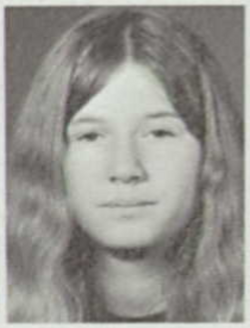
In the summer of 1983, 14-year-old Wendy Stephens, a Caucasian female, vanished from her Denver, Colorado home. For decades, her fate remained a painful mystery to her family. It wasn't until nearly four decades later that the grim truth of her final days came to light, connecting her to one of the most prolific serial killers in American history. Her remains were discovered on March 21, 1984, in a wooded area near a baseball field in what is now SeaTac, Washington.
For years, she was known only as "Bones 10," one of the many unidentified victims of the Green River Killer.
The investigation into the Green River killings spanned years, terrorizing the Seattle area throughout the 1980s. The perpetrator, Gary Ridgway, preyed on vulnerable young women, and Wendy, a runaway, tragically fell into his path. Ridgway would later plead guilty to the murders of 49 women, though he claimed to have killed many more. For a long time, Wendy was one of four victims who remained unidentified after Ridgway's 2003 conviction.
A breakthrough in the case finally came through the pioneering work of forensic anthropologists and the DNA Doe Project. Utilizing genetic genealogy, investigators were able to connect the unidentified remains to Wendy Stephens. In 2021, it was announced that "Bones 10" was indeed the missing girl from Denver. It is believed that Wendy was Ridgway's youngest victim. Gary Ridgway, who is serving multiple life sentences without the possibility of parole, admitted to killing so many women he had lost count. The identification of Wendy Stephens brought a somber resolution to her family, finally giving a name to a girl who had been lost for so long.