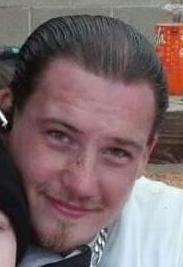
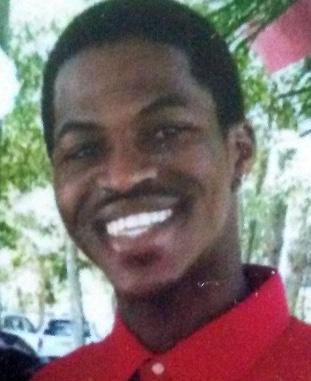
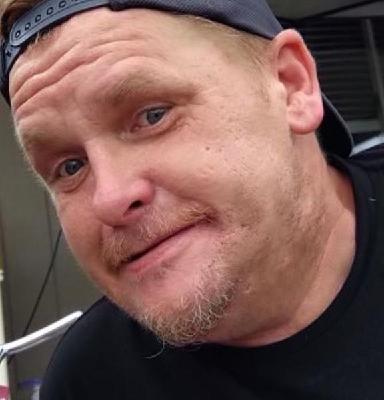
Joaquin Ramirez was a 15-year-old Hispanic / Latino male whose life ended in a burst of gunfire outside a crowded house party in a Spanaway neighborhood of Pierce County, Washington, just after midnight on March 29, 2025. The gathering had drawn dozens, possibly more than a hundred teenagers, to a home near the 17800 block of 25th Avenue Court East, not far from Spanaway Lake High School. In the confusion that followed a street fight, shots rang out, and Joaquin collapsed in the roadway.
The Pierce County Medical Examiner later confirmed that he died from multiple gunshot wounds to the chest, ruling his death a homicide.
Hours before that moment, the party had already become a point of concern in the neighborhood. Court records describe noise complaints starting around 10:46 p.m., with neighbors calling 911 to report loud music and teenagers spilling into the street. Deputies were initially dispatched but diverted to other high-priority calls, including another homicide and an armed robbery elsewhere in the county. As the night wore on, the tension inside the house spilled outside. Around 12:09 a.m., new callers reported a fight in the street, and more deputies headed toward the area. By 12:24 a.m., those calls turned frantic, reporting gunfire. When deputies reached the block around 12:25 a.m., they found a chaotic scene: cars jammed the narrow road, partygoers were running and screaming, nearby houses and vehicles were peppered with bullet strikes, and one teenager—Joaquin—lay mortally wounded in the roadway.
Surveillance video from a nearby home became the central window into Joaquin’s final minutes. According to investigators and charging documents, the footage shows a crowd of teenagers milling in the street when an earlier dispute involving Joaquin and a 17-year-old named Isaiah Davion Williams appears to calm down. Witnesses later told detectives that the two seemed to have made up after an argument. But about a minute later, video shows Williams drawing a handgun and firing at close range into the chest of 19-year-old Hector Gonzalez-Valdez, while Joaquin stands next to him. As Williams falls, wounded by return fire from Gonzalez-Valdez, he is seen shooting toward Joaquin, who drops to the ground and stops moving. Investigators later reported that both Joaquin and Hector were armed—Joaquin with a gun in his waistband, Hector with a firearm recovered from his pocket—adding to the deadly tangle of teenagers and weapons on that residential street.
The gunfight did not end with those two young lives. In total, six people were shot. One victim died at the scene—Joaquin—while Hector was rushed to a Tacoma hospital, where he died after emergency surgery. The remaining four victims, ranging in age from older teens to young adults, were hospitalized with serious injuries but ultimately survived. Among them was 18-year-old college student Jazmine Chavez, who was shot in the pelvis while standing across the street from the main confrontation. She later described the party as a birthday celebration that turned into chaos when the fight shifted outside and bullets suddenly swept across the roadway, striking her even though she believed she was far from the center of the conflict. Her account, and the long recovery that followed, underscored how arbitrary the violence felt to those who were simply in the wrong place at the wrong moment that night.
Very quickly, investigators focused on a single primary shooter: Isaiah Davion Williams, a 17-year-old from Federal Way. He was arrested within hours of the shooting after being found among the wounded and taken to a Tacoma hospital with a gunshot wound to his hip. Prosecutors charged Williams as an adult with two counts of first-degree murder and one count of second-degree unlawful possession of a firearm, alleging that he fired the shots that killed both Joaquin and Hector and that he was illegally armed because of his age and past record. In court, they described him as having previously been convicted in connection with a 2023 incident in Seattle where he was caught with a stolen handgun at a juvenile justice facility. A judge initially set his bail at $2 million, later reducing it to $1 million after a hearing where family and supporters submitted letters describing him as a promising athlete and student, even as prosecutors warned that his history with firearms and the brutality of the Spanaway shooting made him a serious threat to public safety. Williams remains held pending trial, and he has not been convicted in connection with Joaquin’s killing as of the latest available reports.
As detectives continued to scrutinize surveillance footage and witness statements, they concluded that Williams had not been the only person firing. A second teenager, 18-year-old Christopher Lee Jr Cobb, also from Federal Way, was identified as another shooter in the video. Charging documents state that Cobb can be seen running during the chaos and discharging a firearm toward Hector as gunfire erupts. Investigators ultimately linked his appearance in the footage with known photos and school records, learning that he had been a Todd Beamer High School student who was attending classes online after being expelled for bringing a gun to school the previous year. Cobb was arrested on April 17, 2025, after a surveillance operation trailed him in Des Moines; officers stopped the vehicle he was riding in and took him into custody. Prosecutors charged him with first-degree assault for allegedly inflicting great bodily harm during the shootout, and his bail was set at $100,000. Court reports note that he pleaded not guilty to the charge, and, like Williams, his case remains unresolved in the courts.
Beyond the courtroom, Joaquin’s death became part of a larger reckoning in Spanaway and across Pierce County. Neighbors who woke up to the sound of sirens described the aftermath as a war zone, with shell casings scattered across the street and distraught parents searching for their children in the dark. Survivors like Chavez spoke publicly about their trauma, calling for young people to “put the guns down” and urging an end to the cycle of violence that turned what should have been a typical weekend party into a mass shooting. Investigators continued to ask the public for additional photos and video to clarify every movement caught in the flicker of surveillance footage, intent on piecing together each shot and each decision that led to Joaquin’s death. As the cases against Williams and Cobb move slowly through the justice system, Joaquin remains frozen in public memory as the younger of two teenagers killed that night, his story serving as a stark reminder of how quickly a street full of kids can become a crime scene when guns are in their hands.