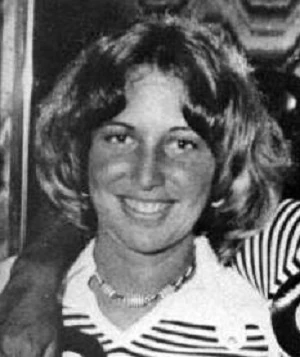
Willie Mae Bivins, a 26-year-old Black woman from Tallahassee, Florida, was found beaten and strangled in May 1984 in a vacant lot near the intersection of Shadeville Highway and Bloxham Cutoff Road in Wakulla County. Her body was discovered two days after she was last seen on May 12, 1984, at several nightclubs along Macomb Street. Witnesses reported that she was spotted getting into a 1970s-style sedan accompanied by a man, described as heavyset with a pot belly and a cast on his leg.
This was the last time she was seen alive.
The investigation into Bivins' murder led authorities to Eddie Daniel Harris, a drifter from Cleveland who had made his way to Tampa and eventually Tallahassee, where he worked at a restaurant. Harris was arrested a year later and charged with first-degree murder after being identified by witnesses who claimed to have seen him with Bivins on the night she disappeared. A polygraph test conducted by law enforcement indicated that Harris was "untruthful in his answers," leading investigators to conclude that he was responsible for Bivins' death.
Despite the initial charge of first-degree murder, Harris was convicted of a lesser charge—manslaughter—in September 1987. He was sentenced to four years in prison but was given extensive credit for time served, meaning he never actually spent time in prison for the crime. At the time of his arrest, Harris also had an outstanding warrant in Cleveland for felony assault, in which he was accused of shooting a man who later recovered. He was brought back to Florida for trial but ultimately did not serve additional time for Bivins' death.
Decades later, in 2020, the Florida Department of Law Enforcement reopened the investigation into Bivins' murder. Officials did not disclose the specific reasons for revisiting the case, but the decision suggested that new evidence or leads had emerged. The case remains an example of the complexities and challenges involved in solving violent crimes, particularly those that span multiple jurisdictions and involve individuals with prior criminal histories.