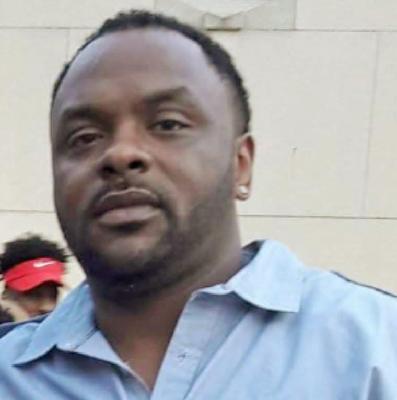
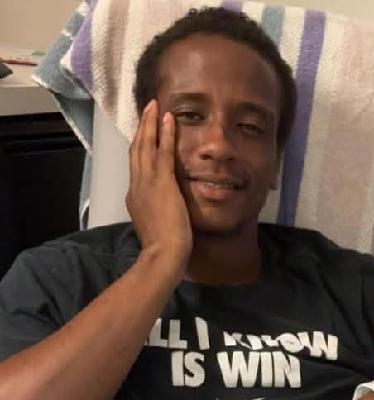
On September 23, 2007, in Kansas City, Missouri, Ramiro G. Lopez died at the age of 33. The details of what happened in the final hours—what led to that day, where he was, what the moments looked like as the world shifted for the people who loved him—aren't part of the information provided here. What is present, and what endures, is the picture of who he was to others and the sudden, aching space his death carved into a family's life.
He left behind his wife, Charity Lopez, and his son, Ramiro Lopez Jr., a name passed down like a promise that something continues even when someone is gone. He was also a son, mourned by Jesus and Josefina Lopez, parents who had known him first and longest, and who would now have to carry the impossible weight of outliving him. Around them was a wide circle of siblings—Jabier, Estefana, Marisela, Josefina, Veronica, Erika, and Esmeralda—each one holding a different version of him: the brother who teased, the brother who helped, the brother who showed up, the brother who was simply there.
His family line stretched further, too, anchored by his grandmother, Carmela Delarosa, and his grandfather, Magdaleno Garcia. In families like this, grief doesn't arrive as a single emotion. It comes in layers—generations stacked together—memories braided through kitchens and phone calls, holidays and ordinary Tuesdays. When someone dies young, the sorrow isn't only about what was lost, but about what will never get to happen: birthdays that will be marked with silence, the milestones his son will reach without him in the front row, the everyday moments that would have been so ordinary they never would have been noticed—until they were gone.
In the days after his death, the world did what it always does in the wake of tragedy: it moved forward, even as his family stood still. Arrangements were made, because that is what the living must do when someone they love has died. Services were scheduled for Monday, October 1, 2007, from 6 to 8 p.m. at Sebbeto's Funeral Home, 901 E. 5th Street in Kansas City. That gathering would not have been just a time on a clock, but a convergence of people carrying their own stunned disbelief. The kind of evening where voices drop instinctively, where hugs last a second longer than normal, where someone's hand stays pressed on another person's shoulder because words don't know how to do the job.
There are no additional details here about arrests, suspects, or any criminal proceedings connected to his death. What remains instead is the human truth: a man died, and the people who loved him were left to pick up the pieces. It is easy for the outside world to reduce a death to a date and a city. But for his family, that day became a dividing line—before and after—measured not in years, but in the moments when his absence would be felt most sharply. A chair that stays empty. A name spoken carefully. A child's question that no one can answer without their voice catching.
Ramiro G. Lopez was 33 years old, a husband, a father, a son, a brother, a grandson—woven into a family so large and loving that his loss would ripple through many lives at once. In the end, that is what this record holds: not the mechanics of how he died, but the evidence that he mattered deeply, and that his death was not an isolated event, but a heartbreak shared by those who gathered to remember him and those who had to learn how to live without him.