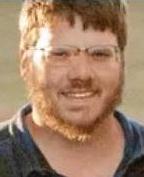
Michael “Mike” Rogers was a 19-year-old male whose killing became the crime most closely associated with the legend of the “Mad Butcher of Fayette County.” Online accounts describe Rogers as a ward of the state who had lived with his foster parents, the Dilleys, on Salem Road since he was about three years old. He stood roughly 5 feet 10 inches tall and weighed about 215 pounds, and people who knew him remembered him as gentle and agreeable. On the evening of December 19, 1962, Rogers told his foster mother that he was going to Salem Market to buy cigarettes. If the market was closed, he planned to continue into Oak Hill and return home afterward.
At about 6:00 that evening, witnesses reportedly saw Rogers on Main Street in Oak Hill riding in the passenger seat of a station wagon bearing Ohio license plates. Hitchhiking was something he was known to do, so simply seeing him in an unfamiliar vehicle did not initially seem alarming. His final confirmed encounter, however, was more troubling. Around 6:30 p.m., Rogers approached someone he knew and asked for a ride home. The witness later recalled that Rogers seemed hurried and possibly frightened. The friend could not take him immediately but told him he would return in roughly half an hour. When the friend came back, Rogers and the station wagon were gone. He never returned to the Dilley home, and his foster family reported him missing to the West Virginia State Police.
For eight days there was no known trace of him. On December 27, a child searching for discarded bottles or bottle caps on the mountainside near the Chimney Corner and Gauley Mountain area came across human remains. The discovery led police to additional pieces scattered through the area. Investigators determined that the remains belonged to Rogers and that his body had been dismembered into approximately thirteen pieces. His head was recovered inside a bag, while a military-style duffel bag contained portions of his torso and several internal organs. The examination of the remains indicated that he had been killed by a gunshot to the head. The bullet's path was described as consistent with a shot fired from behind while he was in a lowered or kneeling position, and the dismemberment was believed to have occurred after death.
The duffel bag became one of the investigation's more unusual leads. An account of the case says police traced its previous ownership to a person in Michigan who reported losing the bag while traveling by Greyhound bus between Michigan and South Carolina in 1959. That trip had included a stop in West Virginia, but the owner reportedly could not say exactly where the bag disappeared. Investigators also reportedly focused on a particularly strong suspect who had once worked for Greyhound and in whose vehicle authorities found an axe, knife and hacksaw that appeared to have blood on them. The suspect denied being in West Virginia when Rogers was killed and said the cutting tools had been used to butcher animals. Despite the suspicious circumstances, he was never charged with Rogers's murder. According to the surviving online account, he later took his own life after turning himself in and expressing fear that he might hurt someone. The available online material does not consistently identify this individual by name, making it unsafe to attach a specific identity to that lead.
Another person who emerged in discussions of the broader Mad Butcher investigation was Hugh Montgomery. In 1964, Montgomery was arrested following a disturbance at a local hospital after he allegedly demanded to be hired as a doctor, left, and then returned with a sledgehammer and damaged property. Searches connected with his arrest reportedly turned up several firearms, a knife, a duffel bag and a meat grinder. Montgomery had some medical training and a military background, circumstances that drew attention because of the extensive mutilation involved in the suspected Mad Butcher cases. He was also reported to have admitted involvement in several killings, although he specifically denied being the Mad Butcher and claimed the deaths he acknowledged had occurred in self-defense. Importantly, accounts place Montgomery at an Air Force installation in Ohio around the time Rogers disappeared, leaving no established evidence that he was responsible for the December 1962 killing. His arrest was connected to the hospital disturbance and his subsequent mental-health evaluation, not to a murder charge in Rogers's case.
Rogers's brutal death changed the atmosphere surrounding a number of unexplained disappearances in southern West Virginia. Several people had vanished in or around Fayette County, often while walking or hitchhiking, and the discovery of a dismembered victim led residents and investigators to wonder whether some of those cases were connected. The unidentified offender eventually became known as the Mad Butcher of Fayette County or the Mad Butcher of West Virginia. Later examinations of the history have cautioned that not every disappearance attributed to the supposed killer can be proven to have been related, but Rogers's homicide remains one of the central and clearly documented violent deaths behind the legend.
No person was successfully prosecuted for killing Rogers. The strong Greyhound-related suspect described in later accounts was never charged, and Montgomery's arrest was for unrelated conduct rather than the homicide. No murder trial or conviction followed from either line of suspicion. Decades later, the identity of whoever shot, dismembered and disposed of Rogers remains unestablished, and the broader question of whether his killer was also responsible for the other disappearances and mutilation cases attributed to the Mad Butcher has never been conclusively answered.