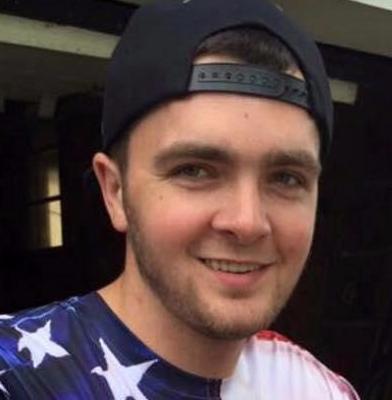
John R. F. “JJ” Johnson was a 25-year-old man whose life was cut short on November 1, 1982, in a killing that would not be fully understood until years later. In the last days of October, he disappeared from Chicago’s Uptown district, a neighborhood where a person could slip out of view without much immediate trace, and at first it looked like the kind of vanishing that might never produce a clear answer.
Nearly two months passed before the winter quiet broke.
On Christmas Day 1982, his body was discovered in rural Lake County, Indiana, near Lowell—left in a field outside the small area known as Belshaw. The distance between where he was last seen and where he was found made the case feel unmoored, as if the truth lay somewhere along the miles of highway in between.
At the time, there was little to connect his death to anything larger. Separate jurisdictions were confronting scattered brutality, and the crimes did not immediately line up into a single picture; the early investigation faced the familiar problem of violence spread across county lines, with each case arriving like an isolated storm. But as more bodies appeared in areas reachable by interstates, the outline of a pattern began to form—young men disappearing, then turning up in remote places where concealment came easily.
Before the killer’s name was widely fixed to the story, he was already moving through Lowell itself. In late September 1983, Larry Eyler was stopped there for a routine traffic matter and detained for questioning while investigators looked at him in connection with the broader string of murders; the scrutiny did not end him then, and later legal rulings would complicate the value of evidence gathered during that period. For families, it was the kind of near-miss that feels unbearable in hindsight—someone drifting close to the center of a mystery, then slipping away again.
Eyler was ultimately arrested in 1984 and convicted in Illinois for the kidnapping and murder of 16-year-old Daniel Bridges; the courts upheld the case through the appeals process, and he was sentenced to death. While he was on death row, he also entered the Indiana courts through a separate murder case and received a long prison sentence there, a consequence of prosecutors trying to pin at least one Indiana killing to something they could prove beyond confession and rumor.
The closest thing to a direct accounting of what happened to Johnson came in the final years of Eyler’s life. Eyler’s appellate attorney, Kathleen Zellner, said Eyler described a methodical spree in which he lured victims with offers of alcohol, drugs, or money, then took them to secluded areas where they were restrained and killed; after Eyler died in prison in March 1994, she publicly released information about confessions she said he had made to 21 killings across Illinois and Indiana. In those late disclosures, Eyler also claimed an accomplice helped in some murders, and Robert David Little—an Indiana State University professor—was charged after Eyler named him; Eyler testified against him, but Little was ultimately acquitted, leaving Eyler as the central figure prosecutors and investigators returned to when explaining the dead left along the interstates.