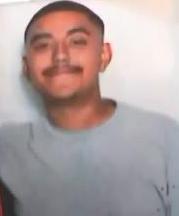
Donald Kleeman, a 48-year-old Caucasian male, was found strangled in his Los Angeles apartment on September 9, 1989. His death was part of a series of murders committed by Juan Chavez, a Mexican serial killer who targeted gay men in Los Angeles County between 1986 and 1990. Chavez, who was born in Ciudad Juarez, Mexico, and later moved to California, had a history of petty crimes before escalating to murder.
He would frequent locations known for male 'street hustlers,' allowing himself to be picked up by his victims, whom he would then rob and strangle using exercise ropes, neckties, and electrical cords.
Chavez's killing spree began in July 1986 with the murder of 46-year-old Alfred Rowswell. Over the next few years, he continued his brutal attacks, with his victims including 57-year-old Ruben Panis, 46-year-old Michael Allen Cates, and 52-year-old Leo Hildebrand. Donald Kleeman was one of the unfortunate victims during this period. Chavez's modus operandi involved gaining the trust of his victims, accompanying them to their homes, and then overpowering them to commit the murders.
The investigation into Kleeman's death and the other murders eventually led to Chavez's arrest in November 1994 while he was serving time in Folsom State Prison for a kidnapping and robbery conviction. Chavez was charged with the murders and later pleaded guilty to five counts of first-degree murder with special circumstances. In June 1999, he was sentenced to five consecutive life terms in prison without the possibility of parole. However, Chavez's story ended tragically when he committed suicide by hanging himself at Folsom State Prison just two months after his sentencing.
The case of Donald Kleeman and the other victims highlights the dangers faced by the LGBTQ+ community during that time and the importance of thorough investigations to bring justice to the victims and their families. The arrest and conviction of Juan Chavez brought some closure to the families of the victims, but the scars left by his heinous crimes remain a stark reminder of the violence that can be inflicted upon vulnerable communities.