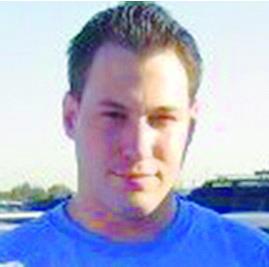
Michael Kinzer, a 44-year-old man, was an electrician from Valley Stream on Long Island who had spent years chasing relief for back pain while also dealing with serious breathing problems, including asthma and chronic obstructive pulmonary disease. By the fall of 2016, the search for help had tethered him to a steady stream of powerful prescriptions from a local general practitioner, Dr. George Blatti, a pattern prosecutors later said ignored obvious danger signs and treated controlled drugs like routine refills rather than last-resort medicine.
In the weeks before Kinzer died on November 17, 2016, that pattern turned sharply ominous. Authorities said that on October 21, 2016, Blatti wrote prescriptions for 90 morphine pills and 90 clonazepam pills, a combination that can suppress breathing—especially in someone already struggling to breathe. Eight days later, on October 29, Kinzer was hospitalized for an overdose, and then developed pneumonia while hospitalized; prosecutors said Blatti even spoke with hospital staff about Kinzer’s condition. Yet, according to the indictment, Kinzer was seen again on November 15 and was prescribed 20 alprazolam pills and 15 oxycontin pills—reportedly the first time Blatti had prescribed oxycontin to him. Two days after that visit, Kinzer was dead, his final days framed by the same lethal mix of sedatives and opioids that had already put him in the hospital.
For years, Kinzer’s death sat among other overdoses that investigators would later connect to the same prescriber. Nassau County authorities said that in August 2018, the Nassau County Police Department’s Asset Forfeiture and Intelligence Unit began digging into a cluster of opioid overdoses—fatal and non-fatal—and noticed a striking overlap: an unusually heavy volume of opioid prescriptions written by Blatti. The probe expanded into a joint effort with the DEA’s Long Island District Office Tactical Diversion Squad, and investigators alleged that between 2016 and 2018, Blatti prescribed thousands of pills—including drugs such as oxycodone, morphine, clonazepam, alprazolam, and oxycontin—often without a medical history or examination, and at times even to people he had never met or spoken with. Authorities also described an almost surreal setting for the prescribing: a makeshift office in a Franklin Square storefront that had once been a Radio Shack, and later, meetings in his car in parking lots near the Rockville Centre hotel where he lived and a nearby Dunkin’ Donuts. Prosecutors further said he relied on paper prescriptions under a waiver that let him avoid New York’s secure electronic prescribing system.
As the investigation tightened, the case shifted from medical scandal to criminal prosecution. Nassau County officials said Blatti was arrested on April 18, 2019, and he later surrendered his medical license on June 24, 2019, after the investigation began. In March 2021, prosecutors announced that he had been arraigned on five counts of second-degree murder under a depraved-indifference theory and 11 counts of first-degree reckless endangerment, with the murder charges described as historic in New York for a prescribing-abuse case; officials said the new charges would be consolidated with and supersede a 2019 indictment tied to the same conduct. In this telling, Kinzer’s death was no longer viewed as an isolated tragedy, but as one chapter in an alleged system of reckless prescribing that prosecutors said treated catastrophic overdoses as background noise rather than a blaring alarm.
The case ultimately ended not with a murder verdict but with a plea and prison sentence. Nassau County authorities said Blatti pleaded guilty on October 10, 2023, to five counts of second-degree manslaughter, and on January 22, 2024, he was sentenced to five to 15 years in prison. In court coverage, family members of the dead described enduring anger and disbelief as the legal process unfolded, while officials framed the prosecution as a warning that a prescription pad can be “as lethal as any murder weapon” when used without restraint. For Kinzer’s loved ones, the story that began with pain and a doctor’s promise ended in a long-delayed accounting—one that treated his death as a crime rooted not in a single violent moment, but in repeated choices that, prosecutors said, made a fatal outcome foreseeable.