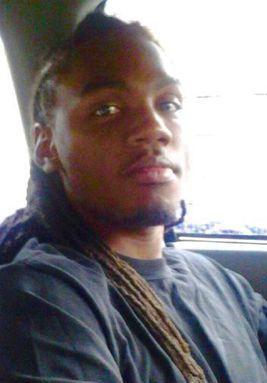
Christopher Wesley Roy, a 32-year-old Black man, died in St. Louis, Missouri, leaving behind a story that is difficult to fully reconstruct from widely accessible public material. What can be said with confidence is that Missouri maintains an official system for recording deaths, with an online death index covering modern decades and a formal process for ordering death certificates through local agencies or the state—meaning the definitive account of his death, including cause and manner, would be preserved in government vital records rather than in the scattered fragments of the internet.
Beyond that foundation, the public record becomes thin. In reviewing readily available law-enforcement pages and other broadly searchable online sources, no official narrative surfaced that lays out the circumstances of Roy’s death in plain detail—no publicly posted timeline that names a location, describes what unfolded, or explains who investigators believed was responsible. The St. Louis Metropolitan Police Department’s Homicide Division describes its role as investigating deaths caused by another person, and it also maintains a public-facing page of selected “unsolved homicides,” encouraging tips—but Roy’s case does not appear in that visible listing, and no corresponding public bulletin was located there that would identify a suspect, name an arrest, or outline pending charges.
That absence matters, because when a case is actively moving through the system—when someone has been arrested, charged, tried, or convicted—those developments usually leave footprints: court dockets, prosecutor announcements, police updates, or local news reports that repeat names and statutes. Here, those footprints were not found in the open, easily verifiable sources consulted. As a result, there is no reliable public basis to report an identified suspect or suspects, an arrest, a set of charges, a trial, or a conviction connected to Roy’s death, and it would be misleading to invent what the public web does not substantiate.
What remains is the outline of a life ended and a case that—at least in the material available without restricted databases, paywalled archives, or direct-record requests—has not been publicly illuminated with the kind of specifics that turn a name into a full account. If the most complete story is to be told, it likely lives where these stories often do when public reporting is scarce: in the official death certificate and investigative file, documents that exist within Missouri’s records systems even when the internet offers only silence.