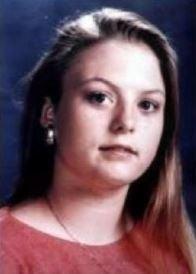
White/Caucasian Sarah Harbison, age 15, finished her Friday shift on December 6, 1991, inside the I Can’t Believe It’s Yogurt! shop in North Austin with her older sister, Jennifer, and their friend Eliza Thomas, while 13-year-old Amy Ayers kept them company. Near closing time, an intruder or intruders turned the small storefront into a crime scene of unimaginable brutality; the girls were bound and gagged, shot in the head, and the shop set ablaze to destroy evidence.
Fire crews uncovered the bodies in the ashes before dawn, and Austin awoke to a horror that would haunt the city for decades.
In the early years, investigators chased tips that led to a circle of local young men. By 1999, police arrested Robert Springsteen IV, Michael Scott, Maurice Pierce, and Forrest Welborn, asserting that confessions and statements tied them to the yogurt shop. Springsteen and Scott were tried separately—one jury recommending death for Springsteen in 2001, another sentencing Scott to life in 2002—while charges against Pierce and Welborn fell away for lack of evidence. From the start, the cases drew scrutiny: there was no physical evidence linking the defendants to the scene, and the confessions—taken after lengthy interrogations—were contested as unreliable.
A cascade of legal reversals followed. Appellate rulings identified constitutional problems with the trials, and as DNA technology improved, testing began to exclude the convicted men. In 2009, Travis County prosecutors dismissed the charges against Springsteen and Scott rather than proceed to retrials they were no longer confident in winning, publicly acknowledging that the available forensic evidence did not match either man. The case slid back into the realm of the unresolved, its grief undimmed and the families of the four teenagers still waiting for an answer.
Renewed testing and reexamination of the physical evidence eventually breathed life into the long-cold file. Investigators leveraged advanced forensic methods to reanalyze trace DNA recovered from the victims and to reexamine a. 380-caliber shell casing from the scene. Those developments converged on a new name far from the original circle of suspects: Robert Eugene Brashers, a violent drifter and convicted offender who died by suicide in 1999 during a police standoff. According to Austin authorities, male DNA beneath a victim’s fingernails and ballistics correlations tied Brashers to the crime; the ammunition evidence mirrored a casing from an unsolved 1998 shooting in Kentucky connected to him.
In late September 2025, Austin police publicly identified Brashers as the likely perpetrator of the yogurt shop murders that claimed the life of Sarah Harbison, age 15, along with Jennifer Harbison, Eliza Thomas, and Amy Ayers, explaining that the totality of the DNA and ballistic evidence now points to him. With the prime suspect deceased, authorities framed the development as a resolution rather than a prosecutable case, while emphasizing their continued interest in any ties that might place Brashers in Austin on the night of the killings. Local officials and the victims’ families marked the moment as long-delayed clarity—an answer that cleared the wrongfully accused and finally named the man they believe stole four young lives on December 6, 1991.