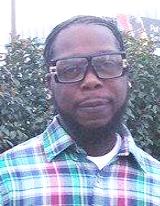
Raylon “Rambo” Kyon Jones was a 38-year-old Black man from Dallas, Texas, known among friends and family as a soft-spoken but dependable presence who loved horses, trail rides, and the tight-knit community around him. On September 10, 2019, in the early hours of the morning, his instinct to step in and protect someone else would cost him his life.
Jones was a member of the Dallas-Fort Worth Trail Riders Association and rode with the Texas Express Relay Team, where fellow riders remembered him as a good-hearted “cowboy” who was always willing to help, and later mourned him publicly as a hero taken too soon.
Shortly before 3 a.m. that morning, a disturbance broke out near TMA Grocery Beer & Wine in South Dallas, in the 2300 block of South Second Avenue near Metropolitan Avenue. Witnesses described a confrontation that began as a verbal argument between a 48-year-old man and another male witness and then exploded into a physical fight. During the struggle, the suspect turned on a woman who tried to intervene, assaulting her as the chaos spilled around the small neighborhood store. Seeing the woman in danger, Jones stepped in to help break up the fight outside the convenience store, placing himself between the aggressor and the people he was attacking.
What happened next unfolded in seconds. The suspect drew a firearm and opened fire, hitting Jones multiple times. Surveillance footage later reviewed by investigators showed Jones being struck by the gunfire, then running across the street toward TMA Grocery before collapsing behind the building in a field or wooded patch of ground. Responding officers followed reports of gunshots to the area and found him lying on the ground with several gunshot wounds. Dallas Fire-Rescue rushed him to a nearby hospital, but despite emergency treatment, he was pronounced dead a short time later, his attempt to shield others ending in a fatal act of courage.
The violence did not stop with Jones. Another witness to the fight was also hit by gunfire and treated at the scene, underscoring how quickly the confrontation spiraled into a broader burst of violence. In the confusion after the shooting, the gunman fled in his vehicle, leaving Jones critically wounded behind the store as frightened bystanders tried to process what they had just seen. Yet the escape was short-lived. Police soon located the suspect in the 5700 block of Bexar Street, took him into custody, and transported him to a hospital for injuries to his face sustained during the earlier fight. Authorities described him as a 48-year-old Black man and announced that he would be charged with murder, aggravated assault with a deadly weapon, and misdemeanor assault, though his name was initially withheld because he had not yet been formally charged.
As word spread, local and national outlets portrayed Jones as a Good Samaritan whose final moments were spent trying to stop an assault on a woman in his neighborhood. Coverage emphasized how he stepped into a situation many people might have avoided, acting on impulse to protect someone else rather than walking away. In trail-riding circles and on social media, friends grieved the loss of the man they called “Cowboy Rambo,” posting messages about his kindness, loyalty, and the senselessness of his death. Memorial pages filled with notes from loved ones who spoke about visiting his profile regularly, missing his presence, and remembering him as someone who “died how he lived” — helping others and standing up when it mattered.
In the months and years that followed, official news coverage focused largely on the initial shooting, the arrest of the 48-year-old suspect, and the expected charges of murder and related offenses, without widely detailing the final outcome of the case in court. Public comments left by family and friends on online memorials later referred to “justice served,” suggesting that legal proceedings eventually moved forward and that those closest to Jones believed accountability had been achieved, even if the specifics of any conviction or sentence remain largely absent from mainstream reporting. What is clear in the public record is that Jones’s death began with a simple act of intervention — stepping between a woman and an attacker — and ended with a community mourning a man they remember as a hero whose courage cost him his life.