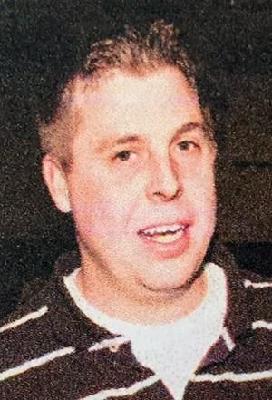
Theopolis Degaphenreed, a 23-year-old male, was killed on July 6, 1981, in Chester, Pennsylvania. His name appeared in at least one contemporary account as Theopolis Degraphenreed, but the known details point to the same young man whose life ended violently on a Monday night in the city he called home. He was reported to have lived at 801 East 7th Street in Chester, a detail that places him not as a distant name in a police blotter, but as someone rooted in a neighborhood, someone with an
address, a daily path, and people who knew where to find him.
That night, Theopolis was found in a vacant lot behind the 600 block of Green Street. It was not the kind of place where a 23-year-old man’s story should have ended. He had been shot twice in the chest, and by the time authorities became involved, the violence had already stolen whatever future he was still supposed to have. The setting adds a lonely weight to the case: a young man discovered outside, behind a block of homes or buildings, in an empty lot rather than surrounded by the comfort of family, friends, or safety. What happened there left behind questions that the available information does not fully answer.
Theopolis was at an age when much of life is still ahead. At 23, people are often still becoming who they are going to be, still making choices, still carrying dreams that may not yet be visible to the world. His death was not just a statistic from Chester in 1981. It was the abrupt end of a life that had barely reached adulthood. Whatever his hopes were, whatever relationships shaped him, whatever plans he had for the days after July 6, they were taken from him in an act of gun violence that reduced a living person to a brief report of a homicide.
Police moved quickly after the shooting and arrested Ronald H. Brown, a 22-year-old man from Chester who was reported to live in the 500 block of East 10th Street. Brown was charged in connection with Theopolis’s killing, including murder, aggravated assault, and related weapons offenses. He was held on $100,000 bail, with a hearing scheduled for July 16, 1981, at Chester District Court. Those charges show that investigators believed they had identified a suspect soon after Theopolis was found, but the available information does not explain what evidence led them to Brown, whether witnesses came forward, or what police believed happened in the moments before the shooting.
The known record leaves much unsaid. It does not explain whether Theopolis and Brown knew each other, whether the shooting followed an argument, whether it was planned, or whether it came out of a sudden confrontation. It does not reveal what Theopolis had been doing earlier that day, who last saw him alive, or how long he remained in that vacant lot before he was discovered. It also does not provide a confirmed final outcome for the case. The available information does not say whether Ronald H. Brown was convicted, acquitted, pleaded guilty, or had the charges resolved in some other way. At the time the case was reported, authorities indicated that the cause of the incident was still under investigation.
What remains is the image of a young Chester man whose life ended in a place that should have been ordinary but became the scene of tragedy. Theopolis Degaphenreed’s death left his family and community with the kind of grief that does not disappear just because newspaper coverage stops. For those who loved him, July 6, 1981, would not have been just a date attached to a homicide report. It would have been the day everything changed, the day a son, relative, friend, and neighbor was taken away.
His story is painful because it is so brief in the public record. There is enough information to know how he died, where he was found, and who was arrested, but not enough to fully understand the life behind the name or the complete path of justice after his death. That silence matters. It means Theopolis is remembered through fragments: his age, his home address, the vacant lot behind Green Street, the gunshots, the arrest, the court date, and the unanswered questions. But even with those limited details, his life deserves to be treated with dignity. He was more than the place where he was found and more than the charges filed afterward. He was a young man whose life ended far too soon, and whose death left behind a wound in Chester that the available record can only partially describe.