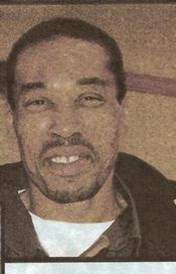
Lewis Doze was 31, a Black man from Detroit, Michigan, and his life was taken in the city he called home. On October 14, 2011, the place tied to his last moments was an address on Marion Street—8293 Marion—an ordinary location that became the dividing line between before and after for everyone who loved him.
There is a particular kind of ache that comes with a death that leaves so little behind in the public record. A date. An address. A name. Those bare facts can feel like a door shut too quickly, as if the world moved on before it ever truly paused to understand what was lost. Yet a person is never just the sum of what appears in a list. Behind Lewis’s name were routines, relationships, and a future that should have kept unfolding—small plans, familiar streets, and the invisible threads that connect someone to their neighborhood, their people, their city.
In the days that followed, even the calendar seems to waver—his death is also recorded as October 15, 2011—two dates pressed close together, like a painful echo. Whether those hours blurred into one another through late-night uncertainty, delayed confirmation, or the slow way devastating news can ripple outward, it still points to the same truth: a life ended too soon, and a family and community forced to carry the weight of that ending.
What came next should have been answers, the steady work of finding out who did this and why. But with only the information available here, there are no named suspects to follow, no arrests to mark a turning point, no charges to trace through a courtroom, no trial to promise clarity, and no conviction to offer a measure of justice. Instead, there is only the quiet, unresolved space where those details would be—an emptiness that can haunt the people left behind, because uncertainty has a way of keeping grief awake.
And still, Lewis’s story did not end at an address on Marion Street. He was laid to rest at Lincoln Memorial Park in Clinton Township, a final resting place that speaks to the love that gathers even when answers do not. Burial is its own kind of promise: that someone mattered enough to be held in memory, enough to be mourned with care, enough to be carried forward in stories told by those who refuse to let a life be reduced to a line on a page.
The tragedy of his death is sharpened by what is missing—no public trail of accountability, no clear conclusion—yet the human truth remains. Lewis Doze was here. He had a place in Detroit. His absence left a hole that numbers and addresses can’t measure. Even without the details the world should have provided, the loss itself is undeniable, and the longing for justice—quiet, persistent, and deeply personal—lingers where the facts run out.