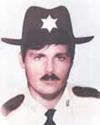
Louis Henry Wagner II, a 25-year-old White/Caucasian male sergeant with the St. Tammany Parish Sheriff’s Office, was killed on June 3, 1978, in St. Tammany Parish, Louisiana, after what investigators described as an ambush. He had been driving home from the sheriff’s office when he was shot. His body was later found in front of a business along Louisiana Highway 21, south of the Covington city limits, while his pickup truck was discovered hours later at a different location.
The
account of the killing suggests Wagner’s attacker may have hidden in the rear of his pickup truck while it was parked at the sheriff’s office, then surprised him after he began the drive home. The shooting appeared targeted rather than random. Later accounts tied the motive to retaliation for an arrest Wagner had made, giving the case the character of a deliberate attack on a deputy because of his law enforcement work.
The case eventually became connected to Robert Lee Willie, a Louisiana killer later best known for the murder of Faith Hathaway and for being one of the death-row inmates associated with Dead Man Walking. While Willie was on death row for a separate capital murder, he confessed to participating in Wagner’s killing. He implicated three other men, identified in online accounts as Richard A. Lott, Perry O. Phillips Jr., and Bobby K. Raney, and the four were reportedly charged with murder. According to those accounts, Wagner had allegedly been killed in retaliation because he had repeatedly arrested one of the men.
That version of the case did not remain clean or uncontested. Willie later recanted part of his statement, saying the three other men had not been involved, and the charges against them were dropped. He then pleaded guilty to second-degree murder in Wagner’s death and received another life sentence. Later, Willie reportedly recanted more broadly, claiming he had confessed because he wanted to remain in the St. Tammany Parish Jail, which he believed would be easier to escape from.
The investigation was further complicated in 1984 when Henry Lee Lucas and Ottis Toole, two notorious serial confessors, claimed responsibility for Wagner’s murder. Authorities considered whether charges would be filed against them, and they were reportedly charged after Willie’s execution, but a grand jury declined to indict them. Later reporting and summaries indicate Lucas and Toole could not have been involved, making their confessions part of the larger pattern of false or unreliable claims surrounding their cases.
In the end, the only clear conviction tied to Wagner’s killing was Robert Lee Willie’s guilty plea to second-degree murder. Willie was not executed for Wagner’s death; he was executed in Louisiana’s electric chair on December 28, 1984, for the rape and murder of Faith Hathaway. Wagner’s murder remains remembered as the line-of-duty death of a St. Tammany Parish sheriff’s sergeant who was apparently ambushed because of his work, with the case marked by a guilty plea, dropped charges against alleged accomplices, and later false confessions that clouded but did not replace the official outcome.